
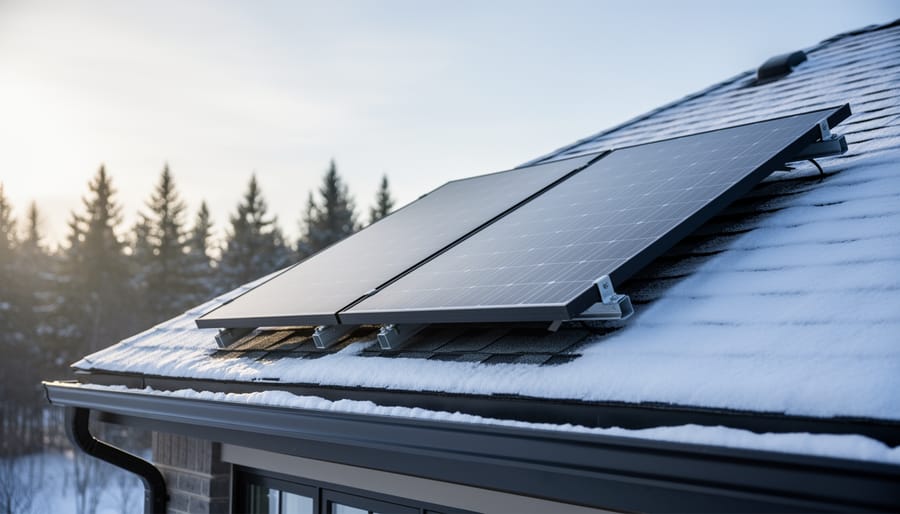
What Are Solar Energy Benefits and Disadvantages? A Balanced Look at Ontario’s Solar Future
Solar energy harnesses radiation from the sun and converts it into usable electricity or heat through photovoltaic panels or thermal collectors. As Ontario accelerates its clean energy transition in 2026, more homeowners, businesses, and municipalities are weighing whether solar power makes financial and environmental sense for their specific circumstances.
The decision to invest in solar energy isn’t simple. On one side, solar installations dramatically reduce greenhouse gas emissions, cut electricity bills over time, and offer energy independence in a province still dependent on natural gas for peak demand. Ontario’s net metering program allows surplus energy to flow back to the grid, creating credit on utility bills. Community solar projects in cities like Ottawa and Thunder Bay demonstrate how shared installations can democratize access beyond individual rooftops.
On the other side, real barriers exist. Upfront installation costs typically range from $15,000 to $30,000 for residential systems, even with available rebates. Ontario’s winter months bring shorter daylight hours and snow coverage that reduce panel efficiency precisely when heating demand peaks. Properties with limited roof space, extensive shading, or north-facing orientation face additional constraints that can make solar less viable.
This article examines both the compelling advantages and practical limitations of solar energy in Ontario’s unique climate and regulatory environment. You’ll find clear explanations of how the technology works, what types of systems exist, where solar applications make the most sense, and the honest trade-offs that inform smart energy decisions.
Key Takeaway: Assess your roof orientation and shading, calculate savings based on your actual electricity bills and Ontario rates, research current incentives, and obtain at least three quotes from certified installers. Your environmental values and long-term plans matter as much as the financial analysis when making this 25-year commitment.
What Solar Energy Means for Ontario
Solar energy is the process of capturing sunlight and converting it into electricity we can use to power our homes, businesses, and communities. Unlike fossil fuels that release carbon when burned, solar power generates clean electricity through photovoltaic technology, specialized materials in solar panels that produce an electrical current when struck by photons from the sun. This silent, emission-free process transforms Ontario’s most abundant renewable resource into usable power.
- Photovoltaic (PV)
- The technology that converts sunlight directly into electricity using semiconductor materials, typically silicon, that generate an electrical current when exposed to light.
- Solar Thermal
- Systems that use sunlight to heat water or air directly, often for residential hot water or space heating, rather than generating electricity.
- Grid-Tied Systems
- Solar installations connected to the provincial electricity grid, allowing excess power to flow back to the utility and drawing power when solar production is insufficient.
- Net Metering
- The billing arrangement where homeowners receive credits for surplus electricity their solar panels send to the grid, offsetting what they draw during non-generating hours.
- Solar Capacity
- The maximum electricity output a solar installation can produce under ideal conditions, measured in kilowatts (kW) for residential systems or megawatts (MW) for larger projects.
Within the Ontario energy mix solar represents a growing segment alongside hydroelectric, nuclear, wind, and natural gas generation. The province has installed over 2,500 MW of solar capacity across rooftop installations, community projects, and utility-scale solar farms. While solar currently supplies a modest percentage of Ontario’s total electricity compared to hydroelectric and nuclear power alternative sources, its role continues expanding as costs decline and efficiency improves. Solar power fits particularly well into Ontario’s renewable energy strategy because it generates electricity during peak demand hours on hot summer days when air conditioning loads strain the grid, providing power exactly when it’s needed most.
How Solar Energy Systems Work

When you switch on a light in your home powered by solar panels, that electricity started its journey just moments earlier as sunlight striking your roof. The transformation from photons to power happens through a remarkably straightforward process.
Solar panels contain photovoltaic cells made from semiconductor materials, typically silicon. When sunlight hits these cells, it knocks electrons loose from their atoms, creating an electrical current. This happens continuously whenever light strikes the panel, even on cloudy days, though at reduced efficiency. Each panel produces direct current (DC) electricity, the same type stored in batteries.
Most homes and businesses run on alternating current (AC) electricity, which is where the inverter becomes essential. Mounted near your electrical panel or sometimes integrated into each solar panel, the inverter converts the DC power from your panels into AC power that matches the voltage and frequency of Ontario’s electrical grid. Modern inverters also monitor system performance and can shut down automatically if grid power fails, protecting utility workers during repairs.
From the inverter, electricity flows to your home’s electrical panel. Your appliances, lights, and devices use what they need in real time. In a grid-tied system, the most common setup in Ontario, any excess power flows back through your meter to the utility grid. Your meter tracks both the electricity you draw from the grid and what you send back, a process called net metering.
For installations with battery storage, excess power charges the batteries before any surplus goes to the grid. These batteries store energy for use after sunset or during power outages, though they add significant cost to the system.
The entire process is automatic and seamless. Once installed and activated, your solar system operates without daily intervention, quietly converting sunlight to electricity whenever the sun rises over Ontario.
Types of Solar Energy Systems
Ontario residents have three main options when installing solar power: grid-tied systems, off-grid systems, and hybrid systems. Each serves different needs and comes with distinct trade-offs.
Grid-tied systems connect directly to Ontario’s electrical grid without battery storage. When your panels generate more electricity than you use, the excess flows back to the grid, and you receive credit through Ontario’s net metering program. When the sun isn’t shining, you draw power from the grid as usual. This setup offers the lowest upfront cost since you’re not paying for expensive batteries. It works well for most homeowners and businesses in areas with reliable grid service. The downside? Your system shuts down during power outages for safety reasons, even on sunny days, unless you add specific equipment.
Off-grid systems operate independently from the electrical grid, relying entirely on solar panels and battery banks to store energy for nighttime and cloudy periods. Rural property owners beyond the reach of power lines, remote cottages, and those seeking complete energy independence choose this route. You’ll need a larger battery bank to cover several days without sun during Ontario’s winter months. Off-grid installations require careful planning to size your system correctly, undersizing means running out of power, while oversizing wastes money. Initial costs run significantly higher than grid-tied options, and you bear full responsibility for maintenance and reliability.
Hybrid systems blend both approaches, connecting to the grid while maintaining battery backup. Your panels charge batteries first, then send excess to the grid. During outages, your system switches to battery power automatically, keeping essential circuits running. This configuration suits homeowners who want grid connection benefits plus backup security, businesses that can’t afford downtime, or anyone in areas with frequent outages. Hybrid systems cost more than grid-tied but less than fully off-grid setups. They offer flexibility, you can start with minimal battery capacity and expand later as your budget allows.
The Key Benefits of Solar Energy
Environmental Advantages
Solar power stands out among electricity sources for its remarkably light environmental footprint. Unlike coal or natural gas plants, solar panels generate electricity without burning fuel, which means zero direct greenhouse gas emissions during operation. For every kilowatt-hour of solar electricity that replaces fossil fuel generation, Ontario avoids roughly 0.13 kilograms of carbon dioxide equivalent, a modest but meaningful contribution as the province phases out remaining gas plants.
Air quality benefits extend beyond climate considerations. Conventional power plants release nitrogen oxides, sulfur dioxide, and particulate matter that contribute to smog and respiratory problems. Solar installations produce none of these pollutants, making them particularly valuable in urban areas where air quality affects public health.
Water conservation represents another often-overlooked advantage. Thermal power stations require enormous volumes of water for cooling, typically 20 to 50 gallons per kilowatt-hour generated. Solar panels need only occasional rain or a light rinse to maintain efficiency, using virtually no water during normal operation. In a province where water is abundant but increasingly recognized as a resource requiring careful stewardship, this efficiency matters.
These environmental benefits align directly with Ontario’s commitment to reduce emissions 30 percent below 2005 levels by 2030. While solar currently supplies a modest portion of the province’s electricity mix, each new installation moves Ontario closer to that target while demonstrating clean energy leadership to other jurisdictions.
Economic Benefits for Homeowners and Businesses
Solar panels deliver measurable financial returns that extend well beyond environmental impact. For Ontario homeowners and businesses, the economic case centers on immediate savings and long-term value creation that can reshape energy budgets for decades.
Monthly electricity bills typically drop 50-90% after solar installation, with the exact reduction depending on system size, energy consumption patterns, and net metering arrangements. A typical Ontario household consuming 800 kWh monthly might save $80-120 per month at current rates, savings that compound as electricity prices rise. This protection against rate increases acts as a hedge against future cost volatility, particularly valuable given Ontario’s history of fluctuating energy rates.
The financial benefits of solar investment include:
- Reduced monthly utility costs averaging $80-120 for typical residential systems
- Federal Greener Homes Grants providing up to $5,000 toward installation costs
- Net metering credits for excess electricity sent back to the grid
- System lifespan exceeding 25 years with consistent power generation
- Low maintenance costs requiring minimal ongoing expense after installation
Property values see a boost too. Ontario real estate studies show homes with solar installations sell for 3-5% more than comparable properties, with buyers increasingly prioritizing energy efficiency and lower operating costs. For a $500,000 home, that translates to $15,000-25,000 in added market value.
Return on investment timelines have improved dramatically. Most residential systems now achieve payback in 8-12 years, after which owners essentially receive free electricity for another 13-17 years of system life. Commercial installations with higher consumption often see even faster payback periods of 6-9 years, making solar an increasingly attractive capital investment for Ontario businesses looking to control operational expenses while meeting sustainability commitments.
Energy Independence and Grid Resilience

Installing solar panels gives Ontario homeowners and businesses greater control over their electricity supply. Instead of depending entirely on the provincial grid, which still draws about 6% of its power from natural gas, solar users generate their own clean electricity on-site. This reduces vulnerability to supply disruptions and price fluctuations tied to fossil fuel markets.
When paired with battery storage systems, solar installations provide backup power during grid outages. While grid-tied systems without batteries shut down during blackouts for safety reasons, adding storage lets critical loads continue running. This proves especially valuable in rural areas where storm-related outages last longer.
Solar also strengthens Ontario’s overall grid resilience through distributed generation. Rather than relying solely on large centralized power plants, thousands of small solar installations spread across the province create a more robust, decentralized network. If one part of the system experiences problems, distributed solar resources continue supplying power locally.
For Ontario, expanding solar capacity means less reliance on imported natural gas and greater alignment with the province’s commitment to clean electricity. Each megawatt of solar deployed represents energy security built from Ontario’s most abundant renewable resource: sunlight.
Community and Job Creation Impact
Ontario’s solar sector has emerged as a meaningful source of employment and economic activity across the province. The installation and maintenance of solar systems require skilled electricians, roofers, and specialized solar technicians, creating career pathways in trades that can’t be outsourced. Local solar companies have established roots in communities from Windsor to Ottawa, employing hundreds of workers who serve their regions directly.
Community solar projects have proven particularly impactful in expanding access beyond individual homeowners. Initiatives in municipalities like Guelph and Kingston allow residents who rent apartments or have unsuitable roofs to subscribe to shared solar arrays, receiving credits on their electricity bills. These projects democratize the benefits of clean energy while keeping investment dollars circulating locally. Though Ontario’s solar manufacturing presence remains modest compared to installation services, component assembly facilities and mounting hardware production have carved out niches in the province’s industrial landscape, contributing to regional economic resilience.
The Disadvantages and Challenges of Solar Energy
Upfront Cost Barriers
The single biggest obstacle preventing many Ontarians from going solar is the upfront cost. A typical residential installation ranges from $15,000 to $30,000 before incentives, depending on system size and roof complexity. That represents a substantial cash outlay for most households, even when long-term savings are clear.
Equipment costs have dropped significantly over the past decade, but installation still requires a meaningful investment. Solar panels, inverters, mounting hardware, electrical work, and professional labour all contribute to the total. While these components deliver decades of service, the immediate financial barrier remains real for families managing tight budgets or competing priorities.
Payback periods typically fall between 10 and 15 years in Ontario, influenced by electricity rates, system size, available incentives, and household consumption patterns. That timeline feels distant when you’re writing the cheque today.
Financing options have emerged to address this challenge. Some installers offer payment plans that spread costs over time. Green energy loans through banks and credit unions provide another path forward. Lease arrangements and power purchase agreements let homeowners access solar benefits without full ownership.
Ontario’s federal and provincial incentive programs reduce the effective cost, though they vary by year and program availability. These rebates and tax credits shorten payback periods and improve the economic case, yet the initial investment remains the primary barrier keeping solar out of reach for many interested Ontarians.
Weather and Seasonal Limitations
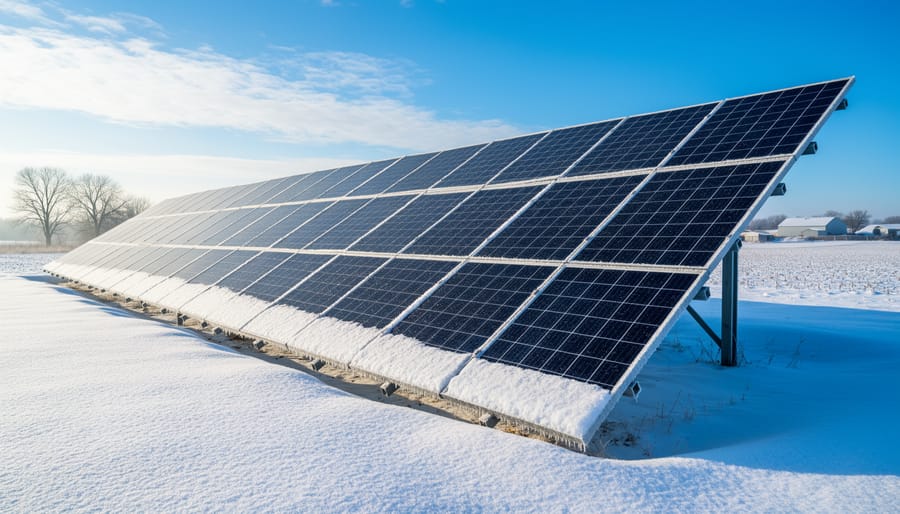
Ontario’s solar production varies significantly throughout the year, presenting real challenges for system owners. During sunny summer days, panels can generate at or near peak capacity, but cloudy conditions immediately reduce output by 50-80%. Winter compounds these limitations, shorter days mean fewer generation hours, while snow cover can temporarily block panels until it melts or is cleared. December and January typically deliver only 20-30% of July’s solar production in Ontario, creating a seasonal mismatch between when panels generate most electricity and when homes need the most power for heating.
Nighttime presents the most obvious constraint: solar panels produce no electricity after sunset, requiring grid connection or battery storage to meet evening demand. This daily intermittency means most Ontario homeowners without batteries draw grid power every night, limiting how much they can reduce their utility dependence.
Battery storage systems partially address these weather and timing challenges by storing excess daytime generation for evening use and providing backup during outages. However, batteries add substantial cost to installations, though Ontario energy rebates can offset some of this investment. Even with storage, extended cloudy periods or heavy winter weeks may still require grid supplementation. These seasonal and daily fluctuations don’t eliminate solar’s value, but they do mean most residential systems work best as grid-connected supplements rather than complete replacements for utility power.
Space and Structural Requirements
Solar panels demand considerable physical space, typically 100-400 square feet for a residential system generating enough power to offset a household’s needs. In Ontario, south-facing roofs with minimal shading deliver the strongest performance, but east or west orientations can still work with slightly reduced output. Nearby trees, chimneys, or taller neighbouring buildings that cast shadows significantly cut energy production, sometimes making installation impractical without tree removal or creative panel placement.
Roof structure matters, too. Panels and mounting hardware add roughly 2.5-4 pounds per square foot, so older roofs may require reinforcement before installation. Asphalt shingle roofs nearing the end of their lifespan should be replaced first to avoid the costly removal and reinstallation of panels later.
Renters and condo dwellers face the steepest barriers. Without ownership rights or permission from landlords and condo boards, installing panels is rarely feasible. Urban properties with limited roof access, shared roofs, or heritage building restrictions further complicate adoption. Community solar programs and portable ground-mounted options offer alternatives, but availability remains limited across Ontario. These spatial and structural realities exclude many residents interested in solar, even as grid reliability updates continue improving renewable integration province-wide.
Manufacturing and End-of-Life Concerns
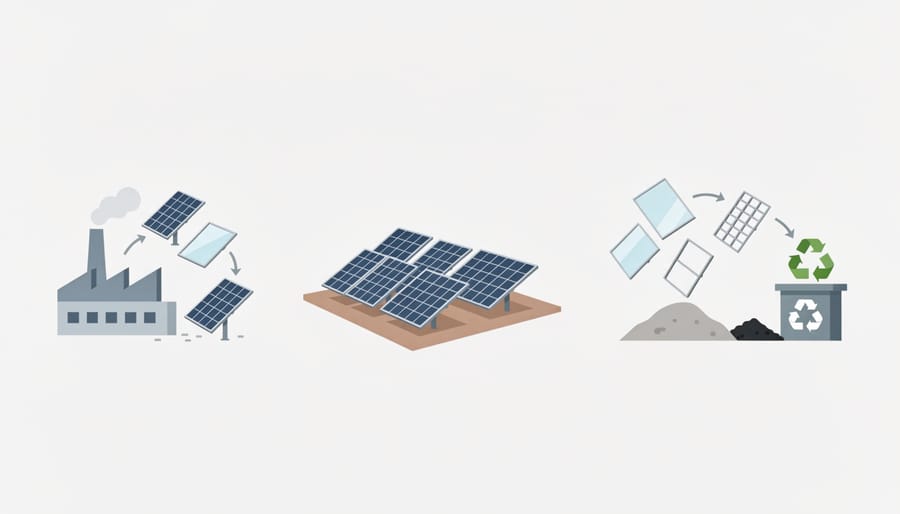
While solar panels generate clean electricity once installed, their production does require energy and raw materials. Manufacturing photovoltaic cells involves mining silicon, silver, and other materials, plus energy-intensive refining and assembly processes. Most panels manufactured overseas rely partly on fossil-fuel-powered facilities, though this environmental footprint continues shrinking as manufacturers increasingly adopt renewable energy and more efficient production methods.
Supply chain considerations also matter. The solar industry has worked to improve transparency around material sourcing and labour practices, though challenges remain in some regions. Ontario buyers can prioritize manufacturers with strong environmental and ethical standards to support more responsible production.
Panel disposal presents another challenge as first-generation installations reach end-of-life. Solar panels contain valuable materials like silicon, glass, and metals that can be recovered, yet recycling infrastructure remains limited in many areas. The solar industry is developing better recycling processes and take-back programs to prevent panels from ending up in landfills. Ontario’s growing focus on circular economy principles aligns with efforts to establish local recycling capacity.
These lifecycle concerns don’t negate solar’s climate benefits, panels offset their production emissions within one to three years and then generate clean power for 25-plus years, but they highlight areas where continued innovation will strengthen solar’s role in Ontario’s clean power future.
Solar Energy Applications Across Ontario
Solar technology has taken root across Ontario in diverse settings, from suburban rooftops to remote northern communities. Each sector adapts solar power to meet specific energy needs, demonstrating the technology’s flexibility beyond simple electricity generation.
Residential installations remain the most visible application. Thousands of Ontario homeowners have mounted photovoltaic panels on garage roofs, backyard ground mounts, and suburban split-level homes. These systems typically range from 5 to 10 kilowatts, offsetting a substantial portion of household electricity consumption while feeding excess power back to the grid during peak production hours.
Commercial and industrial facilities represent Ontario’s fastest-growing solar segment. Warehouses, shopping centers, and manufacturing plants leverage their expansive flat roofs for large-scale installations that reduce operating costs and demonstrate environmental commitment. A Mississauga logistics center might install 500 kilowatts of capacity, while a Kitchener manufacturing facility could deploy even larger arrays to power energy-intensive operations.
Agricultural operations across rural Ontario have embraced solar for both building power and innovative dual-use applications. Barn roofs generate electricity while protecting livestock, and emerging agrivoltaic projects combine crop production with elevated solar panels that provide partial shade for heat-sensitive plants.
Ontario’s solar applications span multiple sectors:
- Rooftop residential systems for single-family homes and townhouses
- Commercial building installations on warehouses, retail centers, and office complexes
- Farm operations including barn solar, greenhouse power, and agrivoltaic crop production
- Remote off-grid communities in northern Ontario replacing diesel generators
- Municipal facilities such as recreation centers, libraries, and solar-powered streetlights
- Electric vehicle charging stations paired with carport solar canopies
Indigenous communities in Ontario’s Far North have deployed solar-diesel hybrid systems that reduce fuel shipment costs and improve energy reliability in isolated areas. These installations prove particularly valuable where traditional grid connection remains impractical or prohibitively expensive.
Municipalities themselves have become solar adopters, installing arrays on fire stations, community centers, and water treatment facilities. These public installations serve dual purposes: reducing taxpayer-funded energy costs while demonstrating leadership in clean energy adoption to residents and businesses.
Making the Decision: Is Solar Right for You?
Deciding whether solar makes sense requires honest assessment of your property, finances, and priorities rather than following trends. Start with your physical space: Does your roof face south, southeast, or southwest with minimal shading? Do you own your home or building, giving you authority to make long-term improvements? If you’re renting or have significant shade from mature trees, solar may not be your best clean energy option right now.
Next, examine your electricity usage and costs. Review a year of Ontario hydro bills to understand your consumption patterns. Properties with high daytime usage and expensive time-of-use rates see faster payback. Calculate potential savings using Ontario’s current electricity rates, then factor in available federal and provincial incentives that reduce your upfront investment. The math works differently for a family home in Ottawa than for a seasonal cottage in Muskoka.
Consider your timeline and financial position. Solar panels typically last 25 to 30 years, so this suits homeowners planning to stay put or willing to capitalize the investment into property value. Evaluate whether paying upfront, financing through a green loan, or leasing aligns with your situation. Some Ontarians prioritize environmental impact and energy independence over maximum financial return, which is a valid approach if you understand the trade-offs.
Get multiple quotes from certified installers who can assess your specific site conditions, provide realistic production estimates for your location, and explain warranty coverage. A thorough installer will point out limitations rather than overselling the technology. Your decision should rest on facts about your property and goals, not abstract debates about solar energy in general.
Frequently Asked Questions
Solar panels continue to generate electricity during Ontario winters, though at reduced output compared to summer months. Cold temperatures actually improve panel efficiency, but shorter days and lower sun angles mean less total energy production, typically 20-30% of summer generation. Snow can temporarily block panels until it slides off or melts, though the dark surface and tilt angle help clear accumulation fairly quickly.
How much can solar really save on electricity bills?
Most Ontario homeowners see savings of $800 to $1,500 annually depending on system size, electricity rates, and consumption patterns. Actual savings vary based on your specific energy use, panel orientation, and whether you participate in net metering programs.
Do solar panels work during Ontario winters?
Yes, solar panels generate power year-round in Ontario, though winter output drops to roughly 20-30% of summer levels due to shorter days and lower sun angles. Cold temperatures actually boost panel efficiency, and snow usually slides off quickly.
What happens to excess energy my system produces?
With grid-tied systems, excess electricity flows back to the grid through net metering, earning you credits that offset future consumption. Systems with battery storage can save surplus power for use during peak times or outages.
How long do solar panels last?
Quality solar panels typically last 25 to 30 years with minimal maintenance, though they gradually lose efficiency over time. Most manufacturers guarantee at least 80% output after 25 years of service.
The payback period for residential solar installations in Ontario generally ranges from 10 to 18 years, influenced by system cost, available incentives, electricity rates, and your household’s energy consumption. Federal programs like the Canada Greener Homes Grant can reduce upfront costs by several thousand dollars, while some municipalities offer additional rebates or property tax incentives for solar installations. Financing options, including green energy loans and refinancing programs, help spread costs over time and can make monthly payments lower than the electricity savings you’ll realize.
Solar energy brings substantial environmental and economic advantages to Ontario, from cutting greenhouse gas emissions to reducing long-term electricity costs and creating local jobs. At the same time, the upfront investment, seasonal output variation, and space requirements present real obstacles that won’t suit every household or business right now.
What matters most is making a decision that fits your specific situation, your roof orientation, energy consumption patterns, budget, and long-term plans. The technology continues to advance, costs keep dropping, and financing options expand each year, making solar increasingly accessible across the province.
Ontario’s clean energy future depends on diverse solutions working together. Solar power fills a critical role in that mix, and as the technology matures, more residents and businesses will find it aligns with both their values and their wallets.