
Is Biomass Renewable? (And How It Works in Ontario’s Energy Mix)
Yes, biomass is classified as renewable energy, but the answer requires important context. Biomass consists of organic materials from plants and animals that can be replenished through natural growth cycles, distinguishing it from finite fossil fuels. When forests regrow, crops are replanted, and organic waste continues to be produced, the carbon released during biomass combustion can theoretically be reabsorbed, creating a closed loop.
However, the renewable label comes with critical conditions. Biomass only maintains its renewable status when harvested sustainably, meaning extraction rates don’t exceed regrowth rates and land management practices preserve ecosystem health. A biomass project that clear-cuts forests faster than they can regenerate or degrades soil quality undermines the renewable foundation entirely. This distinction matters profoundly for Ontario communities evaluating biomass facilities, where local air quality, forest management practices, and genuine carbon accounting determine whether a project delivers on its environmental promises or simply replaces one problem with another.
This article explains what qualifies biomass as renewable, how the energy conversion process works, which types Ontario uses most, and the sustainability benchmarks that separate truly renewable biomass operations from greenwashing.
Key Takeaway: Biomass is renewable because it regrows on human timescales and absorbs CO2 during growth, creating a potential carbon cycle. However, this cycle only works when harvesting rates match regrowth rates and when emissions from processing and transport are minimized.
What Biomass Energy Means
Biomass refers to organic material that comes from plants and animals. This includes wood, crops, agricultural leftovers, food scraps, yard trimmings, and animal manure. Essentially, any material that was recently alive and contains stored energy from the sun can be considered biomass.
Biomass energy, also called bioenergy, is the power we generate by converting this organic matter into heat, electricity, or fuel. When plants grow, they capture sunlight and store it as chemical energy through photosynthesis. Biomass energy taps into that stored solar energy.
- Biomass
- Organic material from recently living plants and animals that can be used as an energy source.
- Bioenergy
- Energy produced from biomass through various conversion processes like burning, fermentation, or decomposition.
- Feedstock
- The raw biomass material used to produce energy, such as wood chips, corn stalks, or manure.
- Organic Matter
- Carbon-based material that comes from living organisms, including plant tissues, animal waste, and decomposing materials.
- Biofuel
- Liquid or gas fuel derived from biomass, such as ethanol from corn or methane from decomposing waste.
The crucial difference between biomass and fossil fuels lies in their timescales. Coal, oil, and natural gas formed from ancient organisms buried and compressed over millions of years. Biomass, by contrast, comes from materials that grew recently, sometimes just months or years ago. A tree harvested for energy today absorbed carbon dioxide from the atmosphere during its lifetime, while coal releases carbon that’s been locked underground for eons. This distinction forms the basis for calling biomass renewable, though the full picture involves more nuance.
How Biomass Energy Works
At its core, biomass energy works by unlocking the sun’s energy that plants have stored through photosynthesis. When plants grow, they capture solar energy and convert it into chemical bonds within their tissues, essentially packaging sunlight into wood, leaves, stalks, and roots. When we convert biomass into energy, we’re releasing that stored solar power through various methods.
The most straightforward method is direct combustion, which is simply burning biomass to produce heat. This heat can warm buildings, generate steam to drive turbines for electricity, or power industrial processes. It’s the oldest form of biomass energy and remains the most common worldwide.
Beyond burning, several other conversion processes extract energy from organic matter:
- Combustion: Burning biomass directly to produce heat and electricity
- Anaerobic digestion: Bacteria break down organic matter in oxygen-free conditions, producing biogas (mostly methane) that can fuel generators or be refined into vehicle fuel
- Gasification: Heating biomass at high temperatures with limited oxygen creates a combustible gas mixture called syngas
- Pyrolysis: Heating biomass in the complete absence of oxygen produces bio-oil, biochar, and gases that can be used as fuels or chemical feedstocks
Each method suits different biomass types and energy needs. Combustion works well for dry wood and agricultural residues. Anaerobic digestion excels at converting wet organic waste like food scraps and manure. Gasification and pyrolysis offer flexibility in fuel outputs and can handle varied feedstocks.
What matters most during conversion is efficiency, how much of the biomass’s stored energy actually becomes usable heat or electricity. Modern facilities in Ontario achieve efficiencies of 20 to 40 percent for electricity generation, with combined heat and power systems reaching 80 percent when both outputs are used.
Why Biomass Is Classified as Renewable Energy
Biomass earns its renewable energy classification because the organic materials it relies on, wood, crops, agricultural residues, and organic waste, regrow within months to decades, not geological epochs. When a tree is harvested for biomass fuel, another can be planted and reach maturity in 20 to 80 years depending on the species. When corn stalks or wheat straw are collected after harvest, the next year’s crop replenishes the supply. This regrowth cycle happens on human timescales, which is the fundamental criterion that separates renewable resources from finite ones.
Fossil fuels like coal, oil, and natural gas formed from ancient organic matter compressed and heated over millions of years. Once extracted and burned, they cannot be replaced within any timeframe relevant to human civilization. Biomass, by contrast, can theoretically be replenished as fast as it’s consumed, provided forests are managed responsibly and agricultural systems remain productive.
The carbon-neutral claim rests on a theoretical cycle: plants absorb carbon dioxide from the atmosphere as they grow through photosynthesis, storing that carbon in their tissues. When biomass burns for energy, it releases roughly the same amount of CO2 the plant captured during its life. If new plants immediately regrow in the same location, they reabsorb that carbon, closing the loop. In this ideal scenario, biomass energy adds no net carbon to the atmosphere over time.
This cycle contrasts sharply with fossil fuels, which release carbon that was locked underground for millions of years, adding new greenhouse gases to the active atmosphere. Biomass taps into the active, ongoing carbon cycle rather than pulling from ancient carbon stores, which is why energy agencies and policymakers classify it as renewable.
The Conditions That Make Biomass Truly Renewable
Sustainable Sourcing and Harvesting
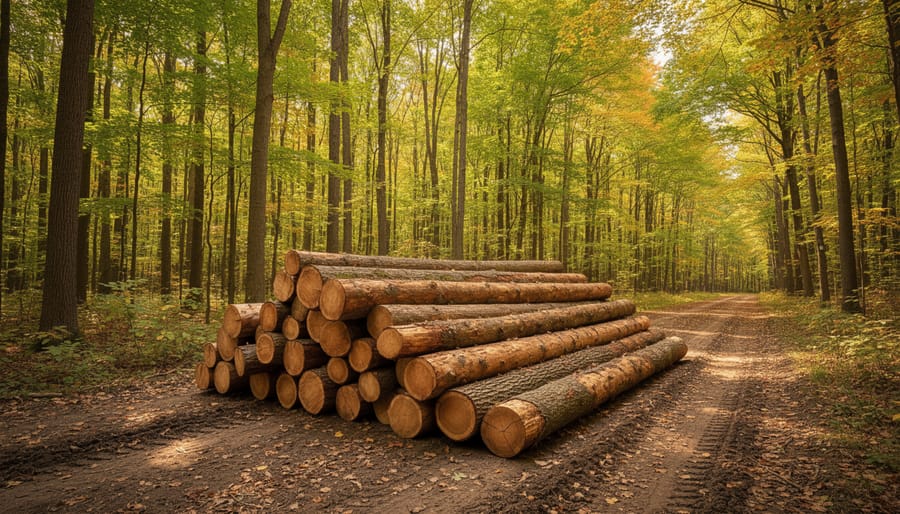
Sustainable sourcing determines whether biomass lives up to its renewable label. When forests are managed responsibly, removing only dead wood, thinning overgrown stands, or harvesting at rates that allow regrowth, biomass can regenerate within decades. The key is matching harvest rates to regeneration capacity. In Ontario, certified forestry programs ensure trees are replanted and ecosystems remain intact, showing how biomass is obtained without depleting forest resources.
Agricultural residues like corn stover, wheat chaff, and crop leftovers offer a lower-impact option. These materials would otherwise decompose or be burned in fields, so using them for energy avoids waste while leaving soil nutrients largely undisturbed. The balance matters: removing too much residue harms soil health and carbon storage.
Avoiding deforestation is non-negotiable. Converting intact forests or wetlands to biomass plantations releases stored carbon, destroys biodiversity, and undermines any climate benefit. True sustainability requires protecting existing ecosystems while using waste streams and carefully managed renewals, not clearing land to grow fuel.
Carbon Emissions and Time Lags
When biomass is burned, it releases carbon dioxide immediately, but that CO2 isn’t reabsorbed until new plants grow to replace what was harvested. This creates what researchers call a “carbon debt” or time lag, which can stretch from decades to over a century depending on the biomass source.
If a forest is cut for wood pellets, those trees may have taken 40 to 100 years to sequester the carbon now released in hours at a power plant. During that gap, the carbon sits in the atmosphere contributing to warming, even if replanting happens right away. Harvest faster than regrowth, and the debt never gets paid off.
Processing adds another layer. Harvesting equipment runs on diesel, pellet mills consume electricity, and transporting biomass to power stations burns fossil fuels. These emissions stack on top of combustion emissions, eroding or even eliminating any climate advantage over coal or natural gas in the near term.
The carbon balance improves only if biomass comes from quick-growing sources like agricultural residues, is sourced locally to cut transport emissions, and replaces fossil fuels that would otherwise be burned indefinitely.
Types of Biomass Used for Energy
Biomass energy comes from four main categories of organic material, each with distinct characteristics and sustainability considerations.
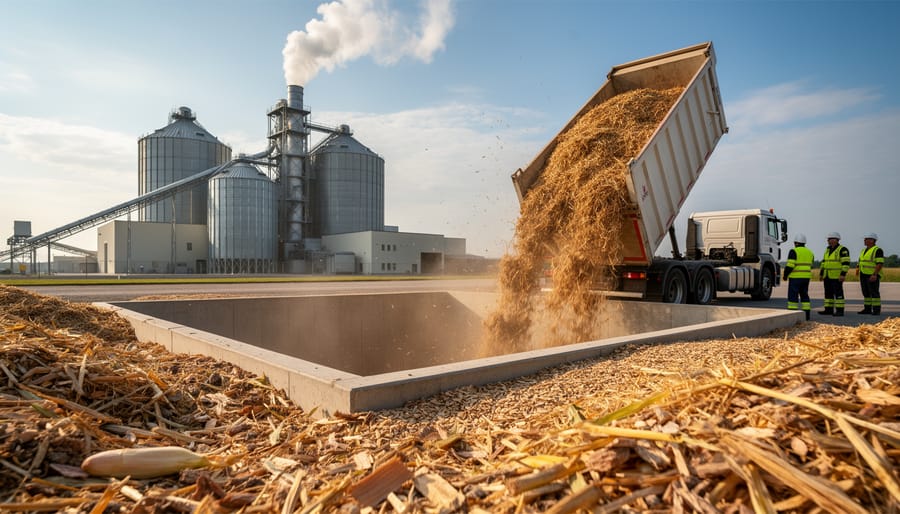
Wood and forest residues represent the most widely used biomass feedstock globally. This includes logging residues like branches and bark, sawmill waste, and wood chips from forest thinning operations. When sourced from sustainably managed forests or waste from existing forestry operations, wood biomass can be relatively sustainable. However, harvesting whole trees solely for fuel raises concerns about forest carbon stocks and ecosystem health.
Agricultural crops and waste encompass dedicated energy crops like switchgrass and miscanthus, as well as residues from food production such as corn stover, wheat straw, and sugarcane bagasse. Agricultural residues offer strong sustainability potential since they’re byproducts of existing farming operations, though excessive removal can degrade soil health. Energy crops grown on marginal land avoid competing with food production, but must be managed carefully to prevent land use conflicts.
Municipal solid waste includes the organic fraction of household and commercial garbage, such as food scraps, yard trimmings, and paper products. Converting this waste to energy diverts material from landfills and captures methane that would otherwise escape. The sustainability profile is generally positive, turning a waste management problem into an energy resource.
Animal manure from livestock operations can be processed through anaerobic digestion to produce biogas. This approach addresses agricultural waste management while generating energy, making it particularly sustainable when it reduces methane emissions from traditional manure storage. Ontario’s dairy and livestock farms increasingly use this approach.
How Biomass Energy Is Used in Ontario
Ontario uses biomass energy across several sectors, from large-scale electricity generation to local heating systems that serve entire communities. The province’s biomass capacity remains modest compared to hydro or nuclear, but it plays a niche role in the clean power mix particularly in rural and northern regions where forestry and agriculture provide steady feedstock supplies.
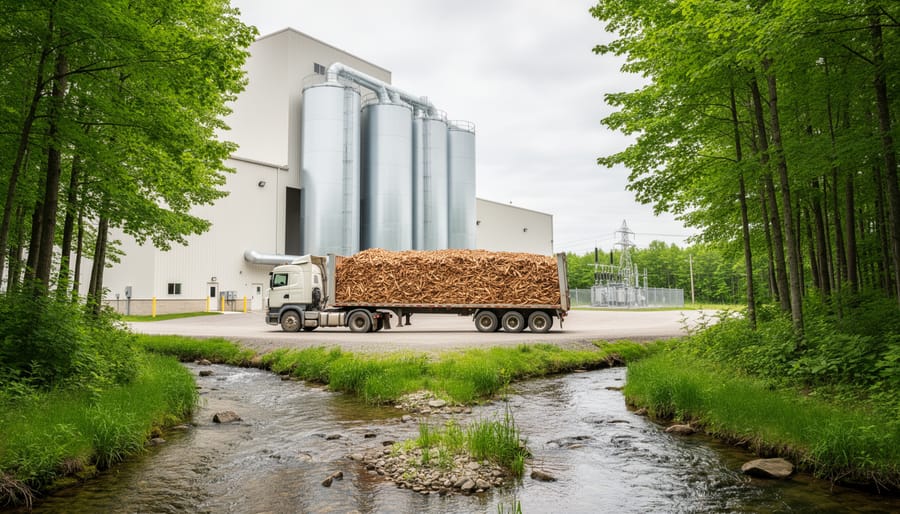
Electricity generation accounts for the largest share of biomass use in Ontario. Several biomass-fueled power plants operate across the province, burning wood residues, mill waste, and agricultural byproducts to produce grid-connected electricity. These facilities often run on sawdust, bark, and wood chips from sawmills and logging operations, converting waste into baseload power.
District heating systems provide another practical application, especially in smaller municipalities and institutional settings. Biomass boilers heat water or produce steam distributed through underground pipes to warm multiple buildings from a central plant, reducing reliance on natural gas or oil for space heating.
Industrial facilities use biomass for process heat, particularly in the forestry products sector. Pulp and paper mills burn their own wood waste to generate steam for manufacturing processes, achieving cost savings and waste reduction simultaneously.
Ontario’s biomass landscape includes diverse projects:
- Atikokan Generating Station, which converted from coal to 100% wood pellets for electricity production
- Thunder Bay’s district energy system, using wood waste to heat downtown buildings
- Renewable natural gas facilities that process organic waste and farm manure into pipeline-quality biogas
- Combined heat and power installations at lumber mills and food processing plants
- Community biomass heating projects in First Nations and remote townships
Overall, biomass contributes roughly one percent of Ontario’s total electricity generation. While small in absolute terms, this capacity supports local economies, provides dispatchable power when solar and wind aren’t producing, and offers a productive outlet for organic waste streams that would otherwise decompose or require disposal.
Biomass and Ontario’s Clean Energy Future
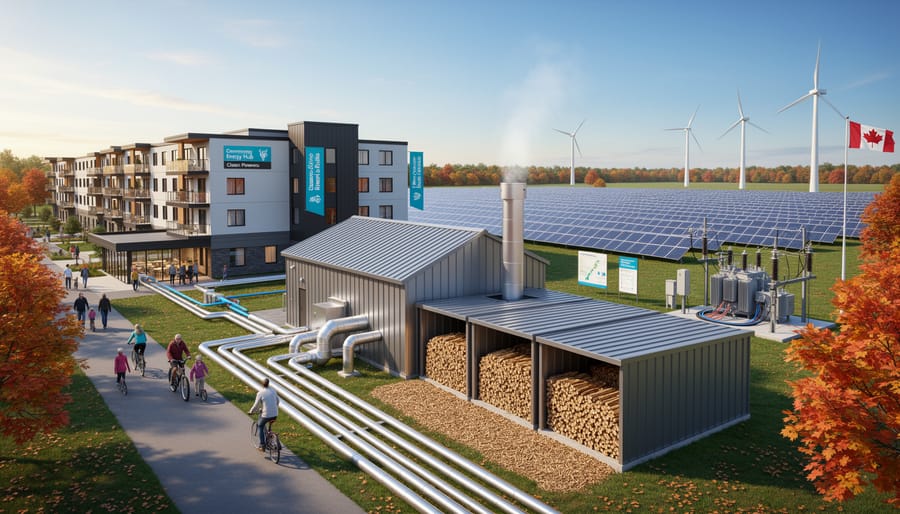
Ontario’s clean energy landscape is changing, and biomass occupies a modest but strategic position in that shift. The province has committed to phasing out natural gas in electricity generation, and biomass offers one pathway to firm, dispatchable renewable power that can fill gaps when solar and wind aren’t producing. Unlike intermittent renewables, biomass plants can run on demand, making them valuable for grid stability.
The benefits extend beyond kilowatt-hours. Biomass projects create jobs in rural communities, turning agricultural residues and forestry waste into economic opportunity. Facilities like the Atikokan Generating Station, converted from coal to biomass, demonstrate how existing infrastructure can be repurposed. Biomass also diverts organic waste from landfills, reducing methane emissions and closing local waste loops.
But challenges remain. Air quality concerns persist around particulate emissions, especially in communities near biomass plants. Land use debates are real: dedicating cropland to energy feedstocks can compete with food production, and large-scale forestry for biomass risks ecosystem disruption if not carefully managed. The wind vs biomass trade-off often favours wind for large-scale clean electricity, given biomass’s higher emissions and fuel costs.
Ontario’s policy framework treats biomass as part of a diversified mix, not the centrepiece. As long as sourcing remains sustainable and local, biomass can contribute to rural resilience and waste management while the province scales up zero-emission technologies.
Common Questions About Biomass Renewability
People searching for information about biomass often have practical questions that go beyond the basic definition. These questions reveal the real-world concerns and trade-offs that shape biomass policy and investment decisions in Ontario and beyond.
Is biomass better than solar or wind?
It’s not a simple better-or-worse comparison. Biomass provides dispatchable power on demand, unlike weather-dependent solar and wind, but it produces emissions and requires ongoing feedstock supply. Each technology fills different roles in a balanced energy system.
Is burning wood really green?
Burning wood releases carbon dioxide immediately, while the trees that replace it take decades to recapture that carbon. It can be part of a low-carbon strategy if forests are managed sustainably and regrow quickly, but it’s not inherently green.
How does biomass compare to natural gas for emissions?
Biomass combustion produces roughly similar CO2 per unit of energy as natural gas, but the carbon in biomass was recently absorbed from the atmosphere. The net climate impact depends entirely on regrowth rates, methane leakage from gas, and how both fuels are sourced and transported.
What makes biomass controversial?
Critics point to air pollution from combustion, competition with food crops and conservation land, and the carbon debt created when forests are harvested faster than they regrow. Supporters highlight waste reduction, rural jobs, and energy independence.
The controversy around biomass stems from the gap between its theoretical renewable status and its real-world environmental footprint. A sustainably managed woodlot that supplies a local heating system operates very differently from industrial-scale forest harvesting for electricity exports. Context matters enormously, which is why blanket claims about biomass being “green” or “dirty” miss the nuance that determines whether a specific project contributes to or undermines climate goals.
Biomass earns its renewable designation because organic matter regrows within human lifespans, unlike fossil fuels locked underground for millions of years. But classification alone doesn’t guarantee sustainability. The real question isn’t whether biomass is renewable, it’s whether we’re using it responsibly.
Ontario’s biomass projects demonstrate both the promise and the pitfalls. When facilities convert agricultural waste into electricity or use forest residues from sustainable harvests, they reduce landfill burdens, support rural economies, and diversify the energy mix. Done right, biomass helps bridge the gap while wind and solar capacity expands.
Yet poorly managed biomass can harm forests, release more emissions than it avoids, and compete with food production. The difference lies in rigorous sourcing standards, replanting commitments, and transparent carbon accounting.
As Ontario charts its clean energy path, biomass will play a supporting role, not a starring one. Its future depends on learning from early mistakes, tightening sustainability criteria, and treating it as one piece of a larger puzzle. The potential is real, but only careful stewardship makes that potential worth pursuing.