
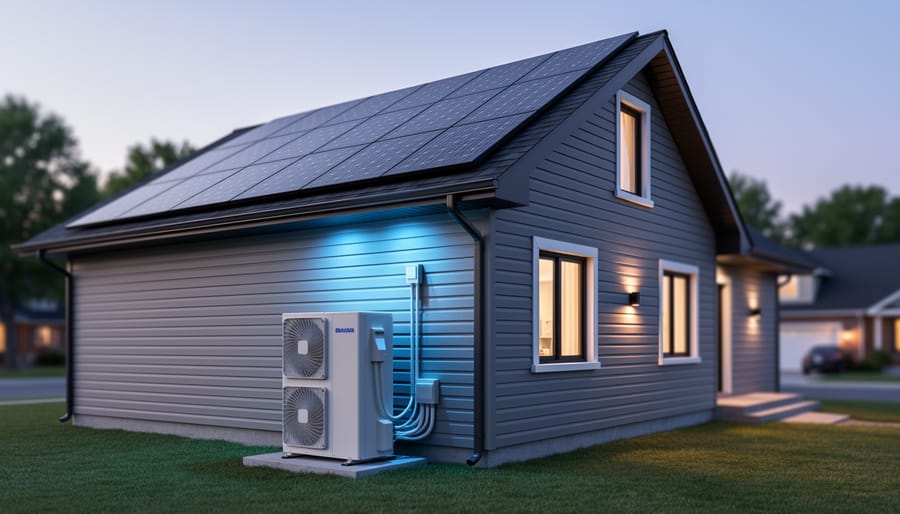
How Ontario Energy Rebates Can Help You Save on Home Upgrades
Ontario homeowners can access up to $15,000 in combined rebates for energy-efficient upgrades through federal and provincial programs in 2026, with heat pumps, insulation, and high-efficiency heating systems qualifying for the largest incentives. The Canada Greener Homes Grant provides up to $5,000 for improvements like solar panels, windows, and air sealing, while Enbridge’s Home Efficiency Rebate Plus (HER+) adds up to $10,000 for natural gas customers upgrading furnaces or installing heat pumps.
These programs represent a significant opportunity for Ontario residents to reduce both upfront renovation costs and long-term energy bills while contributing to the province’s clean energy transition. As Ontario continues expanding renewable capacity, including the Ontario wind future residential efficiency improvements play a critical role in reducing grid demand and carbon emissions.
Understanding which rebates apply to your home, what upgrades deliver the best return, and how to navigate the application process can mean the difference between a modest improvement and a comprehensive energy retrofit. Eligibility requirements vary by program. The federal grant requires pre- and post-renovation EnerGuide assessments and mandates using licensed contractors, while utility rebates often have simpler qualification criteria tied to your energy provider and home location.
This guide breaks down the major rebate programs available to Ontario homeowners, explains qualification requirements, details the application timeline (typically 4 to 8 weeks for federal processing after final assessment), and highlights which upgrades offer the most value for different home types and budgets.
Key Takeaway: Ontario residents can tap into both federal and provincial utility rebates for the same upgrade, potentially combining Canada Greener Homes Grant funding (up to $5,000) with programs like Enbridge HER+ (up to $10,000) to maximize savings on energy-efficient home improvements.
Understanding Ontario’s Energy Rebate Landscape
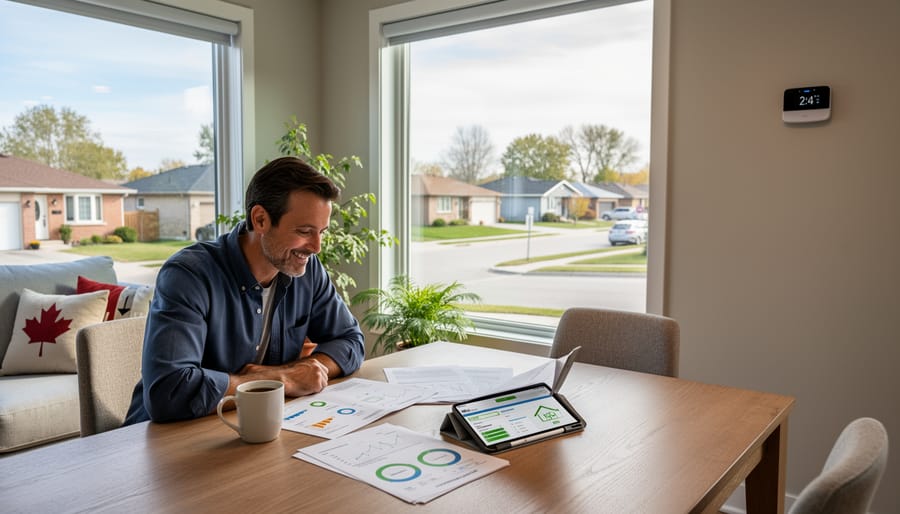
Ontario homeowners have access to energy rebates through two complementary channels: federal programs and provincial utility initiatives. The Canada Greener Homes Grant, administered nationally, provides up to $5,000 for eligible home upgrades like heat pumps, insulation, and solar panels. Meanwhile, provincial utility programs such as the Enbridge Home Efficiency Rebate Plus (HER+) offer additional support, with rebates reaching up to $10,000 for qualifying improvements.
This dual-stream approach creates substantial opportunities for homeowners willing to invest in energy efficiency. Rather than choosing between programs, many residents qualify for rebates from both levels simultaneously, stacking incentives to offset a significant portion of upgrade costs. A homeowner installing a heat pump, for instance, might receive $7,500 from Enbridge HER+ while also claiming federal grant dollars for the same project.
These programs serve Ontario’s broader transition to cleaner energy by making efficiency upgrades financially accessible to more households. Lower energy consumption across the province reduces strain on the electricity grid and decreases overall emissions. The incentives reflect findings from clean power research that demonstrate how residential efficiency improvements contribute meaningfully to provincial climate targets.
For homeowners, the immediate benefit is tangible: reduced monthly utility bills and improved home comfort. The rebates bridge the gap between the upfront cost of quality upgrades and the long-term savings they generate, turning investments that might otherwise take years to pay off into more immediately viable projects.
Major Rebate Programs Available to Ontario Residents
Canada Greener Homes Grant
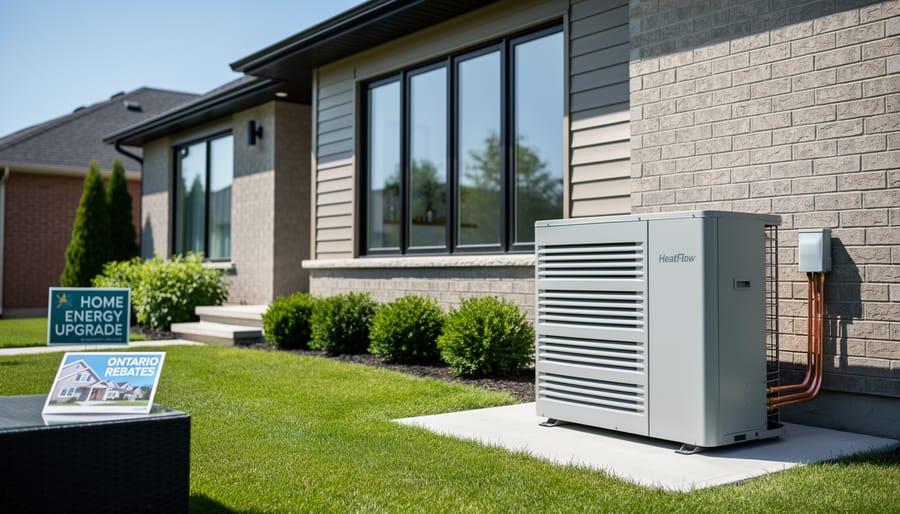
The Canada Greener Homes Grant is a federal initiative designed to make energy-efficient home upgrades more affordable for Ontario residents. Available nationwide, the program provides up to $5,000 in rebates to homeowners who complete qualifying improvements. This financial support helps offset the upfront costs of major efficiency projects while contributing to Canada’s broader climate commitments by reducing residential greenhouse gas emissions.
The grant covers a range of upgrades proven to lower energy consumption. Heat pumps qualify for rebates, offering both heating and cooling while using significantly less energy than traditional systems. Insulation improvements, whether in attics, basements, or walls, reduce heat loss and create more comfortable indoor temperatures year-round. Window and door replacements address drafts and thermal bridging, while solar panel installations allow homeowners to generate their own clean electricity. Air sealing work targets leaks around foundations, electrical outlets, and other common problem areas where conditioned air escapes.
Each upgrade type has specific rebate amounts tied to the improvement’s scope and impact. Homeowners can combine multiple eligible projects within a single application, stacking rebates up to the $5,000 maximum. This flexibility lets you prioritize the upgrades that make the most sense for your home’s current condition and your budget.
The program requires pre- and post-renovation EnerGuide assessments to measure energy performance gains, ensuring the work delivers real efficiency benefits. You must use a licensed contractor for installations, and your home needs to have been built before a certain date to qualify. Processing typically takes four to eight weeks after your post-assessment is complete, so planning ahead matters when timing your upgrades.
Enbridge Home Efficiency Rebate Plus (HER+)
The Enbridge Home Efficiency Rebate Plus program serves as Ontario’s largest utility-led rebate initiative, available to homeowners within Enbridge Gas’s service territory across much of southern and central Ontario. Unlike the federal program’s $5,000 maximum, HER+ offers up to $10,000 in total rebates, making it one of the most generous provincial energy incentive programs in Canada.
The program targets major heating system upgrades with substantial rebates designed to accelerate the transition to high-efficiency equipment. Here’s what homeowners can access:
| Upgrade Type | Maximum Rebate |
|---|---|
| Air source heat pumps | $7,500 |
| High-efficiency furnaces | $6,500 |
| Insulation and air sealing | Varies by project |
| Smart thermostats | Up to $100 |
The heat pump rebate at $7,500 represents one of the highest single-upgrade incentives available through any Ontario program, reflecting the province’s push toward electrification and reduced natural gas consumption. High-efficiency furnaces qualify for $6,500, offering a pathway for homeowners who aren’t ready to transition away from gas heating entirely but want to reduce consumption and costs.
What makes HER+ particularly valuable is how it complements the Canada Greener Homes Grant. A homeowner installing a heat pump, for example, could receive $7,500 from Enbridge plus up to $5,000 federally, bringing the total potential rebate to $12,500 for a single upgrade. This stacking opportunity significantly reduces the upfront cost barrier that prevents many Ontarians from making energy-efficient improvements.
The program serves Enbridge’s natural gas service area, which covers most major population centers in Ontario but excludes regions served by other utilities. Homeowners should verify their eligibility based on location and check current program availability, as utility rebate programs can adjust funding levels or pause enrollment based on budget allocations.
How Programs Can Be Combined
One of the most valuable aspects of Ontario’s energy rebate landscape is the ability to stack federal and provincial incentives for the same upgrade, significantly increasing your total savings. Many homeowners don’t realize they can apply for both the Canada Greener Homes Grant and utility programs like Enbridge HER+ simultaneously.
Consider a heat pump installation. A qualifying Ontario homeowner could receive $5,000 from the federal Canada Greener Homes Grant plus $7,500 from Enbridge HER+, bringing their total rebate to $12,500 for a single upgrade. Similarly, someone installing high-efficiency windows might claim federal dollars while also accessing utility rebates where available.
The key requirements remain consistent: you’ll need pre- and post-upgrade EnerGuide assessments for the federal program, and you must use licensed contractors for both. The programs operate independently, meaning separate applications and processing timelines, but the savings compound. A homeowner combining insulation upgrades with air sealing could realistically offset 50 to 70 percent of project costs through stacked rebates.
Not all upgrades qualify for both streams, and availability depends on your utility provider’s territory. Before planning major renovations, confirm which combinations apply to your specific upgrade and location. The effort of managing two applications pays off substantially when you’re looking at combined rebates exceeding $10,000 for efficiency improvements that reduce your energy bills for decades.
Eligibility Requirements and How to Qualify
Qualifying for Ontario energy rebates starts with understanding which properties and homeowners are eligible. The Canada Greener Homes Grant requires your property to be your primary residence, investment properties and cottages don’t qualify. Your home must have been built before a specific date (typically at least one year prior to application), ensuring the program targets existing homes where upgrades will make the most difference.
Both the federal grant and most utility programs require professional energy assessments. For the Canada Greener Homes Grant, you’ll need a pre-upgrade EnerGuide evaluation to establish your home’s current energy performance, followed by a post-upgrade assessment to verify improvements. These evaluations, conducted by certified energy advisors, identify which upgrades will deliver the greatest impact and document the energy savings you’ve achieved.
Contractor qualifications matter. All work must be completed by licensed, insured contractors who meet program standards. This protects you and ensures upgrades are installed correctly to deliver promised energy savings. Keep all receipts, contractor certifications, and assessment reports, you’ll need them when submitting your application.
For the Enbridge Home Efficiency Rebate Plus program, eligibility depends on your utility service territory. You must be an Enbridge Gas customer in their service area to access these rebates, which can be combined with federal incentives. The program focuses on specific upgrades like heat pumps and high-efficiency furnaces, with different qualification criteria for each rebate tier.
Home age restrictions vary by program. While the federal grant targets older homes built before recent energy efficiency standards took effect, some utility programs may have different cutoff dates or accept newer homes for certain upgrades.
Before starting any work, confirm your eligibility with the specific programs you’re targeting. Complete the pre-upgrade assessment first, starting renovations before this step can disqualify you from receiving rebates. Most programs also require you to register or apply before beginning work, locking in your eligibility under current program rules and available funding.
The Application and Approval Process
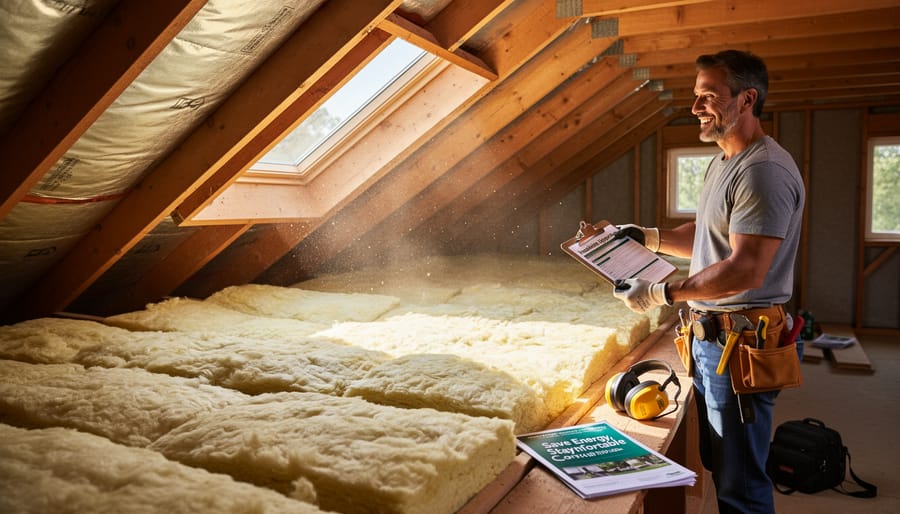
Applying for Ontario energy rebates follows a clear sequence, though the exact steps vary by program. For the Canada Greener Homes Grant, start by registering on the Natural Resources Canada portal and booking a pre-upgrade EnerGuide evaluation. This assessment, conducted by a certified energy advisor, establishes your home’s baseline energy performance and identifies eligible improvements. You’ll receive a report outlining which upgrades qualify and their potential impact.
Once you’ve reviewed your options, hire a licensed contractor to complete the chosen work. Keep all invoices and documentation, you’ll need them for reimbursement. After the upgrades are finished, schedule a post-upgrade EnerGuide assessment to verify the improvements. Submit your final application with both evaluation reports, receipts, and proof of contractor credentials. From this point, expect processing to take four to eight weeks before you receive your grant payment.
Provincial and utility programs like Enbridge’s HER+ often streamline the process differently. Some require an upfront application before work begins, while others allow you to apply after installation. Check the specific program’s requirements early to avoid missing eligibility windows or documentation deadlines.
To keep your application moving smoothly, confirm your contractor is licensed and familiar with rebate program requirements before signing contracts. Mismatched paperwork or unlicensed work can delay approval or disqualify you entirely. Store digital copies of all documents, assessments, invoices, permits, and correspondence, in one accessible folder.
If you’re combining federal and provincial rebates, coordinate the timing carefully. Some programs require completion of one assessment process before accepting applications for additional funding. Contact program administrators directly if you’re unsure about stacking eligibility or sequencing.
Most delays stem from incomplete documentation or missed assessment bookings. Double-check submission requirements, respond promptly to any follow-up requests, and allow extra time during peak application periods when processing can stretch beyond typical windows.
Community Impact: How Rebates Are Transforming Ontario Homes
Across Ontario, energy rebate programs are creating tangible improvements in how residents experience their homes. A family in Mississauga combined the Canada Greener Homes Grant with Enbridge’s HER+ program to install a cold-climate heat pump, reducing their heating costs by 40 percent while eliminating drafts that had plagued their second floor. The combined $12,500 in rebates covered most of the installation cost, making an upgrade that felt financially out of reach suddenly achievable.
In Hamilton, a retired couple used their $5,000 federal grant to upgrade insulation and seal air leaks. Within three months, they noticed lower energy bills and a more consistent indoor temperature. These aren’t isolated stories. Thousands of Ontario homeowners are using rebates to modernize aging systems, cut carbon emissions, and improve year-round comfort without bearing the full upfront expense.
The accessibility factor matters. While some households can afford to stack federal and provincial rebates for comprehensive renovations, new windows, advanced insulation, and efficient heating systems, others focus on single, high-impact upgrades like heat pumps or air sealing. The programs accommodate both approaches. Lower-income families often prioritize projects with the fastest payback, such as insulation improvements that immediately reduce heating costs. These choices still contribute meaningfully to Ontario’s clean energy goals, complementing larger infrastructure initiatives like Ontario biomass projects.
The collective effect adds up. Each rebated upgrade reduces grid demand, lowers household emissions, and demonstrates that clean energy transitions work at the community level when financial barriers shrink.
Common Questions About Ontario Energy Rebates
Can I apply for both federal and provincial rebates for the same upgrade?
Yes, many homeowners can stack rebates from both programs. For example, you might receive up to $5,000 from the Canada Greener Homes Grant and additional funds from Enbridge Home Efficiency Rebate Plus for the same heat pump installation, though total combined amounts may have program-specific caps.
Do I need to complete the upgrades before applying?
No. For the Canada Greener Homes Grant, you must register and complete a pre-retrofit EnerGuide assessment before starting work. The application process begins before upgrades, and you’ll submit documentation afterward for reimbursement.
How long does it take to receive rebate funds?
Processing typically takes 4-8 weeks after your post-assessment is submitted and approved. Building in this timeline helps you plan financing, especially for larger projects that require upfront payment to contractors.
Are renters eligible for energy rebates?
Most programs, including the Canada Greener Homes Grant, require you to own the property as your primary residence. Renters should check with their landlord about potential upgrades or explore tenant-specific efficiency programs if available through local utilities.
Which upgrades offer the best return on investment?
Heat pumps often provide strong value, with rebates up to $7,500 through Enbridge HER+ and federal incentives on top. Insulation and air sealing deliver immediate comfort improvements and lower monthly energy bills, while solar installations benefit from long-term savings and environmental impact.
Beyond these core questions, homeowners often wonder about choosing between upgrade types. The best approach depends on your home’s specific needs, which the initial EnerGuide assessment will reveal. Assessors identify where your home loses energy and which improvements deliver the greatest impact for your situation.
Timing matters for some households. While program availability remains strong in 2026, it makes sense to explore your eligibility now rather than waiting. Budget constraints affect federal and provincial programs differently, and starting your application locks in current incentive levels. Check official program websites for real-time funding status before committing to contractor quotes.
Ontario’s energy rebate landscape continues evolving alongside the province’s broader clean energy transition. Just as new wind technologies advance grid-scale efficiency, home rebate programs help individuals contribute to emissions reduction at the residential level. Staying informed about both program updates and eligibility requirements ensures you capture available savings when planning your upgrades.
Ontario’s energy rebate programs represent a significant opportunity for homeowners to make their properties more efficient while contributing to the province’s clean energy transition. With the Canada Greener Homes Grant offering up to $5,000 and the Enbridge Home Efficiency Rebate Plus providing up to $10,000, residents can access substantial financial support for upgrades that lower both energy bills and emissions. These programs make meaningful improvements affordable for many households who might otherwise delay necessary upgrades.
The environmental benefits extend beyond individual homes. Each heat pump installation, insulation upgrade, or solar panel system adds to Ontario’s collective progress toward cleaner energy consumption. When combined strategically, these rebates can cover a significant portion of project costs, transforming what might seem like expensive investments into accessible improvements.
If you’re considering home energy upgrades, start by reviewing your eligibility for both federal and provincial programs. Program availability and funding can change, so consult official government and utility websites for current deadlines and application status. The assessment and approval process takes time, but the long-term savings and environmental impact make these programs worth exploring now.