
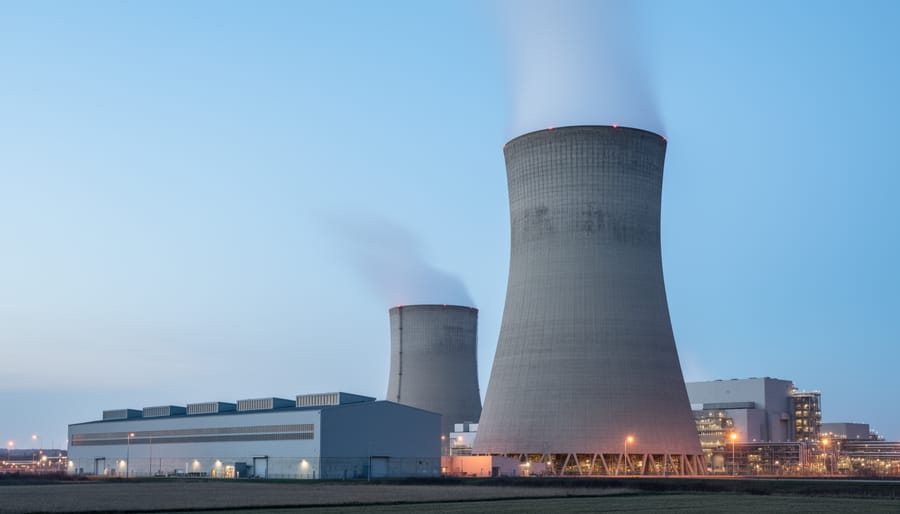
What Is Nuclear Power as an Alternative Energy Source (and How Does It Work)?
Nuclear power is energy generated by splitting uranium atoms in a controlled chain reaction, producing heat that converts water to steam and drives turbines to create electricity without burning fossil fuels or emitting greenhouse gases during operation.
As Ontario and jurisdictions worldwide seek reliable alternatives to natural gas generation, nuclear power has emerged as a proven, low-carbon baseload energy source capable of running continuously regardless of weather conditions. Unlike intermittent renewables such as wind or solar, nuclear plants operate around the clock, making them particularly valuable for grids transitioning away from gas-fired generation while maintaining stability.
The comparison between nuclear and natural gas reveals a fundamental tradeoff. Gas plants can start and stop quickly, ramping up to meet demand spikes, but they release carbon dioxide with every megawatt-hour produced. Nuclear facilities require years to build and operate best at steady output, yet they generate massive amounts of carbon-free electricity once online. Ontario’s experience demonstrates this balance: the province phased out coal by 2014 and now relies on nuclear for roughly 60 percent of its electricity, supplemented by hydroelectric and renewable sources.
This article explains how nuclear fission creates power, outlines the main reactor designs in use today, and examines where nuclear fits in Ontario’s clean energy strategy. Whether you’re evaluating energy policy options or simply curious about the technology behind carbon-free electricity generation, understanding nuclear power’s role clarifies the practical choices available as we move beyond fossil fuels.
Key Takeaway: Nuclear power produces lifecycle emissions comparable to renewables and dramatically lower than natural gas, generates compact, manageable waste volumes rather than atmospheric pollution, and Ontario’s reactor fleet maintains one of the world’s strongest safety records under rigorous provincial and federal oversight.
What Nuclear Power Means as an Alternative Energy Source
Nuclear power generates electricity by splitting uranium atoms in a controlled reaction that produces intense heat. That heat converts water to steam, which drives turbines connected to generators, the same basic principle used in coal or gas plants, but without burning fuel or releasing greenhouse gases during operation.
As an alternative energy source, nuclear power offers a proven pathway to replace fossil fuel generation while maintaining grid reliability. The term “alternative” here means an established substitute for conventional coal and natural gas plants, not an experimental technology. Nuclear facilities deliver constant, large-scale electricity output regardless of weather conditions or time of day, making them fundamentally different from wind and solar renewables that depend on environmental factors.
- Nuclear fission
- The process of splitting uranium atoms to release energy as heat, which is then converted to electricity without combustion.
- Baseload power
- Continuous electricity generation that runs 24/7 to meet minimum grid demand, providing the foundation of a reliable power system.
- Alternative energy
- Energy sources that replace conventional fossil fuels, including both renewable options like wind and solar, and low-carbon options like nuclear.
- Low-carbon generation
- Electricity production methods that emit minimal greenhouse gases during operation, measured across the facility’s full lifecycle.
- Capacity factor
- The percentage of time a power plant operates at full output; nuclear plants typically exceed 90%, far higher than most other sources.
Ontario’s nuclear fleet exemplifies this role. The province’s reactors supply roughly half of the electricity that keeps homes warm, hospitals running, and factories operating. They’ve displaced what would otherwise require dozens of gas plants running constantly, cutting millions of tonnes of carbon emissions annually while supporting the integration of variable renewable sources into the grid.
What sets nuclear apart from true renewables is its fuel source and waste profile. While solar and wind harness naturally replenishing energy flows, nuclear consumes uranium, a finite resource, though one with centuries of known reserves. The trade-off comes in reliability and energy density: a single uranium pellet the size of a fingertip contains as much energy as a ton of coal.
How Nuclear Power Generation Works
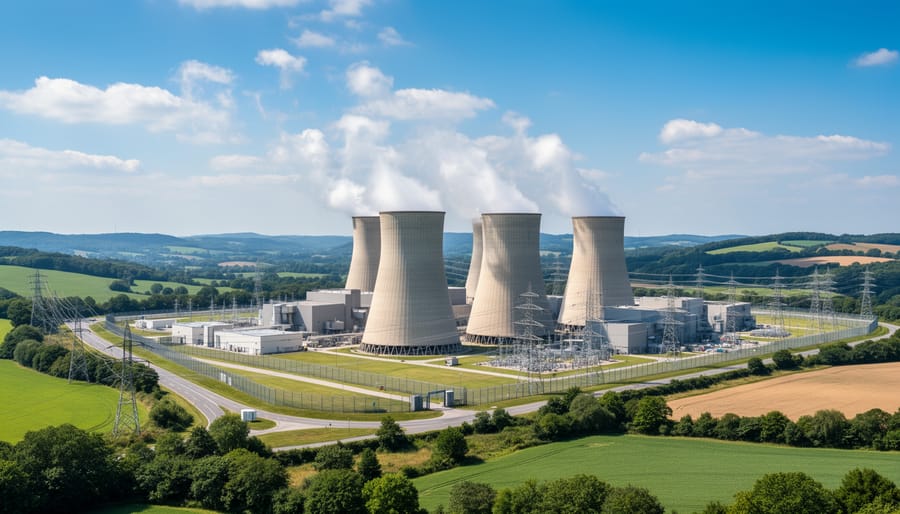
Nuclear power generation begins with uranium fuel, a naturally occurring metal that contains enormous amounts of energy locked within its atomic structure. When a uranium-235 atom absorbs a neutron, it becomes unstable and splits apart in a process called nuclear fission. This split releases more neutrons, which then strike other uranium atoms, creating a self-sustaining chain reaction. Each fission event also releases tremendous heat energy, and it’s this heat that forms the foundation of nuclear power generation.
In Ontario’s CANDU (Canada Deuterium Uranium) reactors, this chain reaction occurs inside hundreds of fuel channels within a large vessel called the reactor core. The fuel itself is formed into ceramic pellets about the size of a fingertip, each containing as much energy as a ton of coal. These pellets are stacked inside long metal tubes called fuel bundles, and multiple bundles are loaded into each fuel channel.
To control the reaction, the reactor core is filled with heavy water, a special type of water that slows down neutrons to the ideal speed for sustaining fission. Heavy water surrounds the fuel channels and acts as both a moderator (controlling the reaction) and a coolant (removing the heat). Control rods made of neutron-absorbing materials can be inserted into or withdrawn from the core to precisely regulate the reaction rate, maintaining steady power output or shutting down the reactor when needed.
As fission occurs, the heat produced raises the temperature of the heavy water coolant to around 300 degrees Celsius. This superheated water remains liquid under high pressure and flows through pipes to steam generators. Inside these units, the heat transfers to regular water in a separate loop, creating steam without any radioactive materials mixing with it. This separation is a key safety feature of CANDU design.
The high-pressure steam then drives large turbines connected to generators, converting thermal energy into mechanical rotation and finally into electricity. After passing through the turbines, the steam cools in condensers and returns to liquid water, which flows back to the steam generators to repeat the cycle. The electricity produced travels through transformers to Ontario’s grid, providing reliable baseload power to homes, businesses, and industries across the province.

Different Forms of Nuclear Energy Technology
Conventional Large-Scale Reactors
Ontario’s conventional nuclear reactors represent some of the largest clean energy facilities in the world. The Bruce Nuclear Generating Station alone houses eight CANDU reactors producing 6,430 megawatts, enough to power roughly 30% of the province’s electricity needs. These massive installations typically span several hundred acres and employ thousands of workers in skilled technical roles.
Traditional reactors like those at Pickering and Darlington operate continuously for 18 to 24 months between refueling outages. Each unit contains hundreds of fuel bundles arranged in pressure tubes, with heavy water serving as both moderator and coolant. The scale allows for exceptional efficiency: a single fuel bundle the size of a fire log can power an average home for over a year.
These plants were designed for 30-year lifespans but ongoing refurbishment programs extend their operation well beyond original projections, with Darlington and Bruce units receiving multi-billion-dollar upgrades to serve Ontario’s grid through the 2060s.
Small Modular Reactors (SMRs)
Small Modular Reactors represent a new generation of nuclear technology designed to be built in factories and assembled on site, rather than constructed from scratch at each location. Unlike conventional plants that produce 800 to 1,000 megawatts, SMRs typically generate under 300 megawatts per unit. This smaller footprint makes them suitable for remote communities, industrial sites, and regions where a full-scale reactor would be oversized.
The modular design offers flexibility: utilities can install one unit and add more as demand grows, spreading capital costs over time. Factory production promises shorter construction timelines and potentially lower costs through standardization. SMRs also incorporate passive safety systems that rely on natural forces like gravity and convection rather than active mechanical components.
Ontario is advancing SMR deployment through partnerships with reactor developers and a commitment to install units at existing nuclear sites. Ontario Power Generation plans to build an SMR at Darlington by the early 2030s, positioning the province as North America’s first jurisdiction to operate a commercial grid-scale small modular reactor. This initiative supports decarbonization goals while testing technology that could serve northern Ontario communities currently reliant on diesel generation.
Nuclear Power Versus Natural Gas: Key Differences
Nuclear power and natural gas both generate electricity through heat-driven turbines, but they differ fundamentally in how they produce that heat and what consequences follow. Nuclear plants split uranium atoms through fission, releasing massive amounts of energy without combustion. Gas plants burn methane, releasing carbon dioxide and other emissions directly into the atmosphere. This single distinction cascades into divergent profiles across emissions, reliability, fuel requirements, and land footprint.
The emissions gap is stark. A nuclear plant produces zero greenhouse gases during operation, while a modern combined-cycle gas plant emits roughly 400 to 500 grams of CO₂ per kilowatt-hour generated. Over a typical 60-year nuclear plant lifespan, that difference translates to hundreds of millions of tonnes of avoided carbon. Ontario’s shift from coal to nuclear and hydro cut provincial electricity-sector emissions by more than 90 percent between 2005 and 2014, a trajectory impossible with gas as the primary alternative. Clean power research continues to refine integration strategies, but the baseline advantage of nuclear’s zero operational emissions remains unmatched by any fossil fuel.
Reliability and baseload capacity separate the two most clearly. Nuclear plants run continuously at near-full output for 18 to 24 months between refuelling, achieving capacity factors above 90 percent in Ontario. Gas plants can ramp output up and down quickly, making them flexible but dependent on continuous fuel supply and market prices. A nuclear facility stores years of fuel onsite in compact form; a gas plant requires constant pipeline deliveries vulnerable to supply disruptions, geopolitical shifts, and price volatility.
Land use and fuel density favour nuclear decisively. A single CANDU reactor on a few hundred hectares generates as much electricity as a gas plant requiring similar space but needing vast upstream infrastructure for extraction, processing, and transport. The energy density of uranium means one fuel pellet the size of a fingertip holds the energy equivalent of a tonne of coal or 150 gallons of oil.
Ontario’s grid relies on nuclear for stable, round-the-clock power that wind and solar cannot yet provide alone, and gas cannot deliver without ongoing emissions. The operational contrast makes nuclear the province’s cornerstone for decarbonization.
Where and How Nuclear Power Is Used
Ontario’s three nuclear stations, Bruce, Pickering, and Darlington, generate roughly 60% of the province’s electricity, forming the backbone of a low-carbon grid that powers homes, hospitals, schools, and factories across the province. Unlike gas plants that ramp up and down to meet demand peaks, nuclear provides steady baseload power around the clock, delivering consistent output regardless of weather or season. This reliability allows Ontario to integrate variable sources like wind energy future expansions and new wind tech without sacrificing grid stability, nuclear holds the system steady when wind drops or solar output fades.
Beyond electricity generation, nuclear energy supports diverse applications across Ontario:
- Grid baseload electricity supplying consistent power to homes, businesses, and institutions
- District heating projects using reactor heat for municipal heating systems
- Hydrogen production through electrolysis powered by nuclear electricity
- Industrial process heat for manufacturing operations requiring high-temperature steam
- Grid stability support enabling higher renewable energy penetration
The Bruce Power facility in Kincardine directly supports more than 22,000 jobs in the region and contributes $4 billion annually to Ontario’s economy. In Clarington, home to Darlington station, the municipality benefits from stable tax revenues that fund local services while residents work in skilled trades, engineering, and operational roles. Pickering’s nuclear plant has anchored Durham Region’s economy for decades, with workers living in communities from Ajax to Oshawa.
Industrial users like steel mills, chemical plants, and data centres rely on nuclear’s uninterrupted supply for energy-intensive processes. Ontario Power Generation is exploring small modular reactors to serve remote mining operations and northern communities currently dependent on diesel generators. These compact units could provide both electricity and heat, reducing emissions while creating new economic opportunities in regions far from the main grid.
Environmental and Safety Considerations
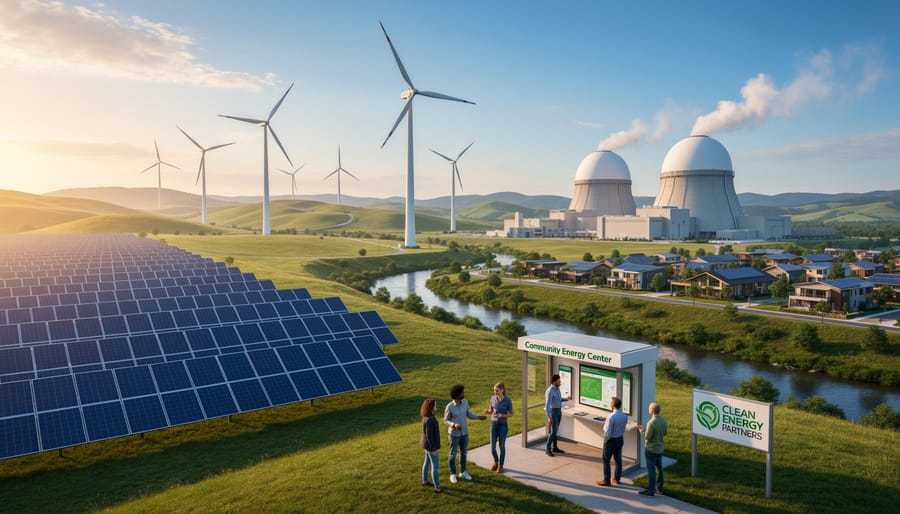
Nuclear power carries a low carbon footprint across its lifecycle, far smaller than natural gas generation. While uranium mining, plant construction, and decommissioning produce some emissions, operational reactors emit virtually no greenhouse gases during electricity production. Studies consistently show nuclear’s lifecycle emissions per kilowatt-hour fall between solar and wind, and well below fossil fuels. For a province transitioning away from coal and reducing gas dependence, this environmental profile supports Ontario’s climate targets while maintaining reliable baseload supply that complements the biomass energy mix and other renewables.
Waste management remains nuclear’s most cited concern, though the actual volumes are surprisingly small. A typical Ontario reactor produces roughly three cubic meters of high-level waste annually, all solid material that stays contained on-site in robust dry storage casks. Contrast that with gas plants releasing emissions directly into the atmosphere. Ontario’s reactors store used fuel safely in engineered facilities at Bruce, Pickering, and Darlington, with a long-term deep geological repository planned for permanent disposal. Low and intermediate-level waste follows established protocols, with Ontario Power Generation managing dedicated facilities that have operated without incident for decades.
Water use for cooling draws attention, but modern systems recirculate rather than consume water, and strict thermal discharge limits protect aquatic ecosystems. The Canadian Nuclear Safety Commission enforces comprehensive environmental monitoring at every Ontario site, tracking radiation levels, water quality, and ecological indicators. Routine measurements consistently show negligible environmental impact beyond the immediate plant footprint. Safety protocols layer multiple independent systems, containment structures, emergency cooling, automatic shutdown triggers, with regular inspections and staff training that exceed international standards. Ontario’s reactors have accumulated over 200 reactor-years of operation without a significant public safety event, a record reflecting both robust design and disciplined regulatory oversight.
Ontario’s Nuclear Energy Landscape
Ontario operates three nuclear generating stations, Bruce, Pickering, and Darlington, that together supply roughly half the province’s electricity. Bruce Power, the world’s largest operating nuclear facility, runs eight CANDU reactors on Lake Huron’s shores. Darlington operates four units east of Toronto, while Pickering’s six remaining reactors are scheduled for gradual shutdown by 2026, marking a planned transition in the province’s fleet.
The province has committed $26 billion to refurbish ten reactors at Bruce and Darlington, extending their operational life by 30 years. These Life Extension Projects preserve 10,000 megawatts of clean baseload capacity and support 20,000 jobs during construction phases. Darlington’s refurbishment began in 2016 and continues in stages, while Bruce’s program runs through the early 2030s. Local communities benefit directly through employment, tax revenue, and infrastructure investments that strengthen regional economies.
Ontario Power Generation is advancing plans for small modular reactors at Darlington, positioning the province as North America’s SMR hub. The first unit could be operational by 2028, demonstrating next-generation nuclear technology for industrial applications, remote communities, and grid support. Saskatchewan, New Brunswick, and Alberta have signed collaborative agreements with Ontario to develop SMR supply chains and regulatory frameworks.
The province’s nuclear sector employs 60,000 people directly and indirectly, generating $5 billion annually in economic activity. Municipalities hosting nuclear facilities receive community investment programs, educational partnerships, and energy rebates that offset local electricity costs. Ontario’s Clean Energy Credits, introduced in 2024, allow nuclear generators to monetize their emissions-free output, creating new revenue streams that support future zero-carbon investments. This established infrastructure and policy framework position Ontario as a continental leader in nuclear innovation and deployment.
Common Questions About Nuclear as an Alternative Energy
Nuclear power raises important practical questions, especially for Ontarians weighing energy options for their communities and industries. Here are answers to the most common queries about nuclear as an alternative to gas-fired generation.
Is nuclear power cheaper than natural gas?
Nuclear has higher upfront construction costs but significantly lower fuel and operating costs over its 60-80 year lifespan, making it more economical long-term than gas plants that face volatile fuel prices. Ontario’s nuclear fleet provides stable electricity rates insulated from natural gas market fluctuations.
How long does it take to build a nuclear plant?
Conventional reactors typically require 7-10 years from planning to operation, while small modular reactors promise construction timelines of 3-5 years due to factory fabrication and simpler on-site assembly.
Can nuclear energy work alongside solar and wind?
Yes, nuclear provides steady baseload power that complements intermittent renewables. Ontario’s grid uses nuclear to maintain constant supply while solar and wind contribute when available, reducing the need for gas peaker plants.
What happens to nuclear waste in Ontario?
Used fuel is safely stored on-site in robust containers, with plans for a deep geological repository to isolate it permanently. Canada’s waste volumes remain small, all of Ontario’s used fuel since the 1960s would fit in six Olympic swimming pools.
How many jobs does nuclear create?
Ontario’s nuclear sector directly employs over 60,000 people across operations, refurbishment, engineering, and supply chains, with positions concentrated in communities like Clarington, Kincardine, and Pickering that benefit from stable, high-skilled employment.
The fuel supply question matters too. Canada produces uranium domestically and holds substantial reserves, ensuring energy security without reliance on imported gas. Nuclear fuel rods contain immense energy density, a single pellet the size of a fingertip produces as much electricity as a ton of coal or 149 gallons of oil, meaning refueling happens only every 18-24 months rather than continuous gas deliveries.
Community benefits extend beyond jobs. Nuclear plants contribute significant property tax revenue to host municipalities, fund local infrastructure projects, and support education initiatives. Towns near Ontario’s nuclear stations often enjoy lower residential electricity rates and economic stability that attracts other industries, creating diversified local economies less vulnerable to energy market swings than gas-dependent regions.
Nuclear power stands as Ontario’s most established alternative to natural gas for reliable, low-carbon electricity generation. The province’s decades of operational experience demonstrate that nuclear technology delivers consistent baseload power while producing virtually no greenhouse gas emissions during operation. This track record becomes increasingly valuable as Ontario works to phase out remaining gas-fired generation and meet growing electricity demand.
The evolution from large-scale CANDU reactors to emerging small modular reactor technology shows nuclear energy adapting to modern grid needs. Ongoing refurbishment projects at Bruce, Pickering, and Darlington ensure this clean energy foundation remains viable for decades ahead, while SMR development positions Ontario to export expertise alongside electricity.
Understanding nuclear power’s role requires moving beyond outdated assumptions. Modern reactor designs incorporate lessons from six decades of commercial operation. Rigorous safety protocols, transparent waste management strategies, and continuous technological improvements address legitimate concerns while preserving nuclear’s essential advantage: dense, dispatchable energy that complements rather than competes with renewable sources.
Ontario’s energy future depends on informed choices about technologies that can realistically replace fossil fuels at scale. Nuclear power already proves it can do exactly that, generating clean electricity that powers homes, businesses, and industries across the province every single day.