New Wind Energy Technologies Transforming Ontario’s Clean Energy Future
Wind turbines today look familiar, but the technology inside them has transformed dramatically. Floating platforms now anchor turbines in deep waters previously unreachable. Artificial intelligence predicts optimal blade angles milliseconds before wind patterns shift. Drones inspect towering structures that once required crews dangling from ropes hundreds of feet in the air.
Ontario stands at the center of this technological revolution. The province’s wind farms generated over 7,200 megawatts of installed capacity in 2026, powering more than two million homes. But capacity alone doesn’t tell the full story. These new technologies are making wind power cheaper, more reliable, and capable of reaching communities that couldn’t access it before.
The innovations reshaping wind energy fall into four major categories: offshore expansion through floating platforms, AI-driven performance optimization, autonomous maintenance systems, and advanced grid integration. Each addresses a specific limitation that once constrained the industry. Floating turbines unlock coastlines with deep waters. Machine learning squeezes additional output from existing installations without new construction. Remote inspection cuts maintenance costs while improving worker safety. Smart grid connections smooth out the intermittent nature of wind power.
Understanding what’s coming next matters for anyone tracking Ontario’s energy transition. These technologies aren’t experimental prototypes. They’re being deployed right now, changing how the province generates and distributes clean electricity. The implications reach beyond environmental benefits to economic development, job creation, and energy independence for remote communities across Ontario’s vast geography.
Floating Wind Technology: Opening New Frontiers
How Floating Platforms Work
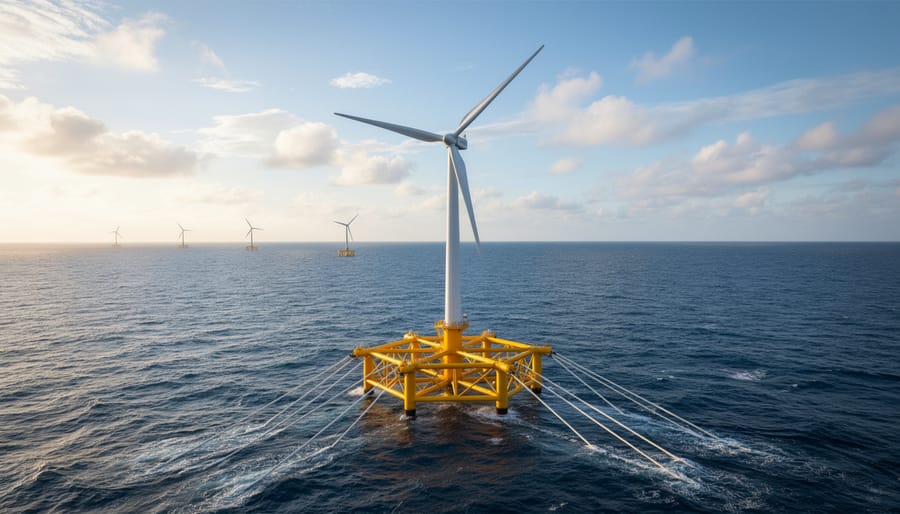
Floating wind turbines rely on three main platform designs to remain stable in deep water. Spar platforms use a weighted, cylindrical structure that extends deep below the surface, creating stability through ballast. Semi-submersible platforms feature multiple floating columns connected by bracing, distributing buoyancy across a wider footprint. Tension-leg platforms anchor directly to the seabed with taut vertical cables that resist the structure’s buoyancy, holding it firmly in place.
Mooring systems keep these platforms positioned despite wind and wave forces. Most floating installations use catenary moorings, where heavy chains or synthetic ropes form a curved line from the platform to anchors on the seafloor. The weight and shape of these lines provide restoring force when the platform drifts, pulling it back toward its intended position without rigid connections that would snap under stress.
Stabilization technology addresses the constant motion inherent to floating structures. Advanced control systems adjust the turbine’s blade pitch and yaw in real time, compensating for platform tilt and rotation to maintain optimal power generation. Some designs incorporate active ballast systems that shift water between chambers to counteract wave-induced motion, though passive stability through careful weight distribution remains the primary approach.
These engineering solutions enable turbines to operate in waters 60 meters deep or more, where traditional fixed foundations become impractical. The platforms must withstand decades of ocean conditions while maintaining the precise alignment needed for efficient energy capture, a challenge that has driven continuous refinement of materials, sensors, and control algorithms.
Atlantic Canada’s Offshore Wind Opportunity
Canada’s offshore waters hold vast wind energy potential, yet the country has no offshore wind projects built to date. Atlantic Canada, with its extensive coastline and strong ocean winds, represents the most promising region for this untapped resource. Recent floating platform advances make development in these deep Atlantic waters increasingly feasible, shifting what was once theoretical potential into practical possibility.
The 2026 Atlantic Canada Offshore Wind Readiness Forum signals growing momentum in the region. This initiative focuses on early-stage research and actions designed to reduce development risks before projects move forward. It brings together researchers, policymakers, and industry stakeholders to address the unique challenges facing Atlantic Canada’s offshore sector.
Grid integration research is advancing in parallel with future wind tech developments. Net Zero Atlantic’s three-part Atlantic Canada Offshore Wind Grid Integration and Transmission Study examines both domestic electricity needs and export opportunities. The first two phases wrapped up in June 2025 and January 2026, analyzing how offshore wind could connect to the Atlantic Canadian grid. The final report will develop a transmission plan based on these findings.
These research efforts lay crucial groundwork. Understanding transmission requirements, environmental considerations, and regulatory frameworks before construction begins helps ensure Atlantic Canada can capitalize on offshore wind when the technology and economics align for large-scale deployment. The region is positioning itself to move decisively when market conditions support Canada’s first offshore installations.
Artificial Intelligence in Wind Farm Operations
Artificial intelligence is rapidly moving from a theoretical advantage to a core operational tool in wind energy. Turbine operators are deploying AI algorithms that analyze sensor data in real-time, identifying potential mechanical failures days or weeks before they occur. This shift from reactive to predictive maintenance reduces downtime and extends turbine lifespan, translating directly into higher energy output and lower operational costs.
The practical applications span multiple aspects of wind farm management. AI integration in wind systems now addresses several key operational challenges:
- Predictive maintenance algorithms that detect bearing wear, gearbox degradation, and component fatigue before failures occur
- Automated blade inspection systems using computer vision to identify surface cracks and erosion patterns
- Power output forecasting models that predict generation capacity hours or days in advance based on weather patterns
- Grid balancing algorithms that optimize turbine performance across entire wind farms to match electricity demand
These systems learn from historical performance data, weather patterns, and equipment behavior to make increasingly accurate predictions. A wind farm operator can now receive alerts about a specific turbine component weeks before it fails, schedule maintenance during low-wind periods, and avoid expensive emergency repairs or extended outages.
For grid operators, AI-powered forecasting solves one of wind energy’s longstanding challenges: its variable nature. By predicting output with greater precision, utilities can integrate wind power more effectively into their generation mix, reducing reliance on backup fossil fuel plants. The technology also enables individual turbines to adjust their operation in response to grid conditions, ramping production up or down as needed.
The operational benefits extend beyond cost savings. AI systems can detect performance degradation that human operators might miss, ensuring turbines operate at peak efficiency throughout their lifecycle. This optimization means more clean energy generated from existing infrastructure, maximizing the climate benefit of each installed turbine without requiring additional land or resources.
Remote Inspection Technologies for Challenging Environments
Floating and offshore wind installations present unique inspection challenges that traditional onshore methods cannot address. Fixed onshore turbines allow ground-based technicians to climb towers and schedule maintenance during calm weather, but floating platforms move constantly with ocean waves, and offshore sites may only be accessible a few days each month depending on sea conditions. These constraints push the industry toward remote, repeatable inspection technologies that can operate regardless of weather and without putting technicians at risk.
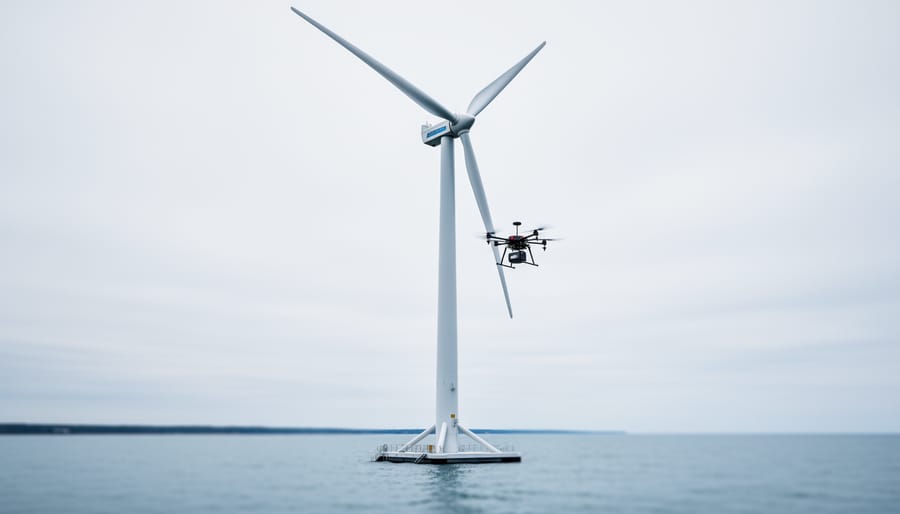
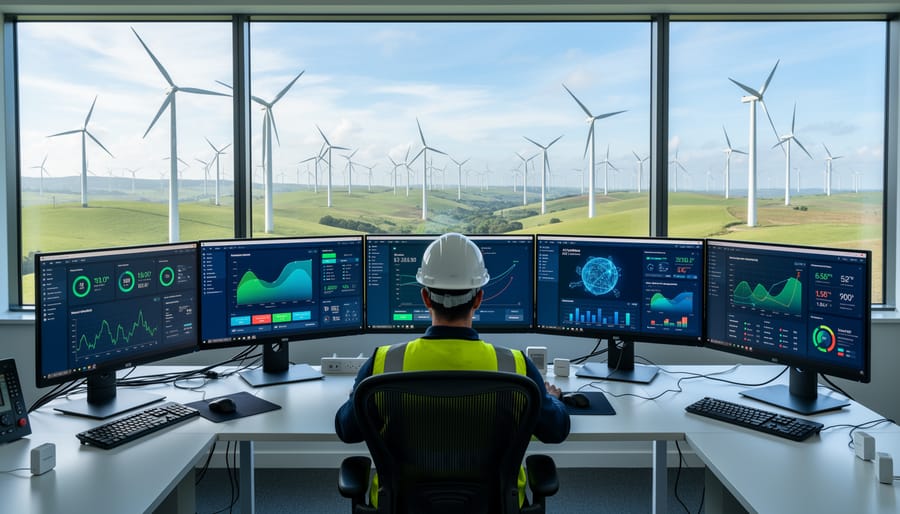
Drones equipped with high-resolution cameras have become standard for visual inspections of turbine blades, towers, and nacelles. Operators can launch drones from vessels or onshore bases, capturing detailed imagery of blade surfaces to detect cracks, erosion, or lightning strike damage without shutting down the turbine. For floating wind, drones offer a safer alternative to sending rope-access technicians onto platforms that pitch and roll with the waves. The technology has matured enough that some operators now schedule routine drone surveys quarterly, building a time-series dataset that reveals deterioration trends over months or years.
Sensors embedded directly into turbine components provide continuous monitoring that complements periodic visual checks. Accelerometers track vibration patterns in gearboxes and bearings, flagging unusual wear before a component fails. Strain gauges on blades measure bending forces during storms, helping engineers understand real-world loading conditions. Acoustic sensors can detect the early stages of gearbox tooth wear, and thermal cameras mounted on drones identify hotspots in electrical systems. Offshore platforms also carry environmental sensors that log wind speed, wave height, and platform motion, giving operators the data needed to correlate equipment performance with operating conditions.
Automated monitoring systems synthesize these sensor streams into a single operational picture. Software platforms alert technicians when measurements deviate from normal ranges, prioritizing which turbines need attention and scheduling maintenance during the next accessible weather window. This approach reduces the need for helicopter visits and emergency repairs at sea, cutting operational costs while improving uptime.
Advanced Subsea Cable and Transmission Systems
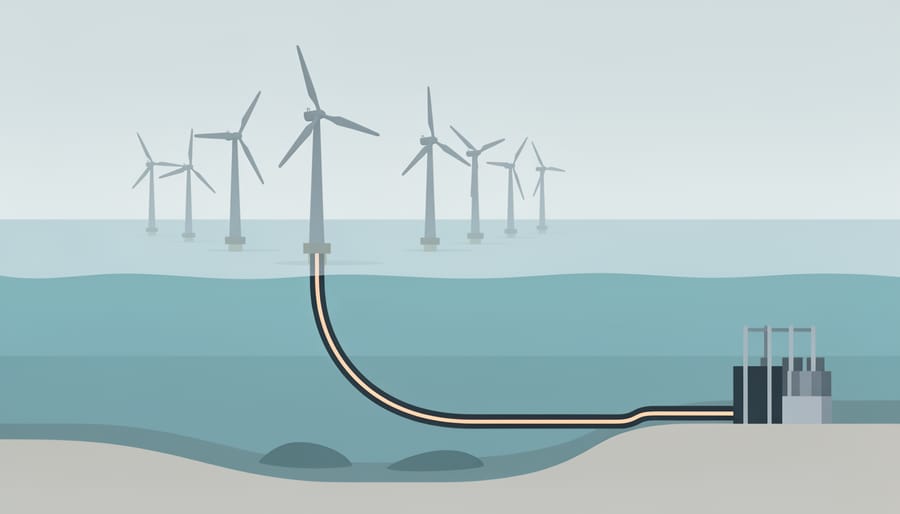
Offshore wind farms generate power far from shore, but that energy is only useful if it can reach population centres and the electricity grid. Subsea cables have become a critical piece of infrastructure, carrying electricity underwater from remote turbine arrays to coastal substations and onward to homes and businesses. Recent advances in cable design, insulation materials, and installation techniques are making it possible to transmit larger amounts of power over longer distances with less energy loss.
Modern subsea cables use high-voltage direct current (HVDC) technology, which reduces electrical resistance and maintains efficiency across distances that would cause significant losses with alternating current systems. These cables must withstand harsh marine conditions, including saltwater corrosion, strong currents, and the mechanical stress of shifting seafloors. Engineers have developed protective layers and burial methods that shield cables from fishing gear, ship anchors, and natural wear, extending operational lifespans while reducing maintenance needs.
For Canada, transmission infrastructure represents one of the biggest hurdles to developing offshore wind capacity. Net Zero Atlantic’s Atlantic Canada Offshore Wind Grid Integration and Transmission Study is examining how offshore wind energy could connect to the Atlantic Canadian grid for domestic use and potential export. The first two phases of this research series were completed in June 2025 and January 2026, analyzing technical and economic considerations for bringing offshore power ashore.
Key Takeaway: The final report in the Atlantic Canada study series will develop a comprehensive transmission plan based on earlier research phases, providing a roadmap for connecting future offshore wind projects to the grid.
Without robust subsea cable systems and grid integration planning, offshore wind farms remain isolated generators. These transmission advances, combined with ongoing research into Atlantic Canada’s specific needs, are laying the groundwork for eventually connecting offshore wind resources to the communities and industries that need clean energy.
What These Technologies Mean for Ontario
While offshore floating wind and remote inspection technologies capture headlines in Atlantic Canada, Ontario’s wind energy sector stands to benefit from many of these same innovations without venturing into deep water. The province’s established onshore wind infrastructure provides an ideal testing ground for AI-driven operations and advanced monitoring systems, technologies that improve performance regardless of whether turbines sit on land or sea.
Ontario wind farm operators are already exploring how next-gen wind energy tools can extend equipment life and reduce maintenance costs. Predictive AI systems that anticipate component failures before they happen translate directly to fewer service interruptions and lower repair expenses. Drone inspection technology, refined for challenging offshore environments, works just as effectively for reaching turbine nacelles in remote rural areas where road access proves difficult during winter months.
The transmission innovations developed for subsea cables also inform upgrades to Ontario’s grid infrastructure. As the province considers expanding wind capacity in northern regions, lessons from Atlantic Canada’s grid integration research offer valuable insights into connecting distributed renewable assets efficiently. Communities hosting wind projects could see more reliable revenue streams as these technologies boost output and operational predictability.
Ontario’s policymakers and industry groups are monitoring these developments closely, even as the province focuses on onshore installations. The technical knowledge gained from floating wind research transfers to improving foundation designs and structural engineering for land-based turbines facing extreme weather. When maintenance teams adopt inspection protocols developed for hard-to-access offshore platforms, they bring that efficiency to Ontario’s existing wind farms.
The practical result means better performance from current assets and smarter planning for future projects, ensuring Ontario remains competitive in clean energy generation as the sector evolves.
The technologies reshaping wind energy today are dismantling obstacles that stalled progress for decades. Floating platforms unlock deep-water regions beyond the reach of fixed installations, while artificial intelligence sharpens performance and cuts downtime through predictive maintenance. Remote inspection tools solve access challenges at offshore sites, and advanced subsea cables form the critical link between turbines and the grid. These aren’t distant promises, they’re operational systems refining how the sector develops and manages energy infrastructure.
Ontario’s onshore wind landscape may seem distant from offshore major wind developments underway in Atlantic Canada, yet the province stands to benefit as these innovations mature. AI-driven optimization and automated inspection technologies apply equally to land-based farms, improving reliability and reducing costs. As Atlantic Canada’s grid integration research advances and offshore projects move from planning to construction, Ontario stakeholders gain valuable insights into integrating next-generation wind capacity.
Canada’s wind sector is building the foundation for a cleaner grid, one innovation at a time. The technologies arriving now address real constraints and open pathways that weren’t viable five years ago. With research initiatives gaining momentum and global experience expanding, Ontario and the broader Canadian market are well-positioned to adopt these advances as they prove their worth at scale.