
Wind Energy Is About to Change Everything (Here’s What’s Coming)
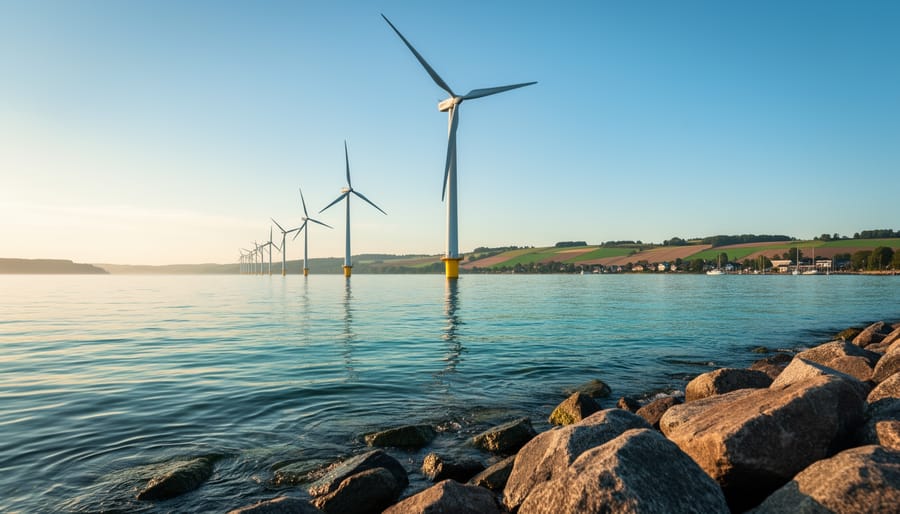
Wind turbines stretching 300 meters into the sky—taller than the Eiffel Tower—will soon harvest energy from powerful offshore winds that current technology cannot reach. These next-generation installations represent just one breakthrough transforming wind energy from a supplementary power source into the backbone of Ontario’s electrical grid within the next decade.
The limitations holding back today’s wind farms are giving way to innovations that sound like science fiction but are already moving from laboratories to real-world deployment. Floating turbines that can venture into deep waters, bladeless designs that eliminate bird strikes, and artificial intelligence systems that predict wind patterns weeks in advance are not distant dreams. Companies are installing prototypes now, with commercial rollout planned for 2026-2030.
For Ontario communities, these advancements mean more than cleaner energy. They represent economic opportunities in manufacturing, installation, and maintenance jobs that cannot be outsourced. Small towns across the province are positioning themselves as hubs for this technological shift, recognizing that early adoption brings lasting advantages.
The transition also addresses practical concerns that have slowed wind energy acceptance. New turbine designs operate silently, integrate seamlessly into agricultural landscapes, and generate consistent power even when wind conditions vary. Storage technologies now being deployed ensure that excess energy captured during windy periods powers homes during calm days.
Understanding these emerging technologies is essential for anyone involved in Ontario’s energy future—whether you’re a policymaker drafting regulations, an educator preparing students for green careers, or a resident wondering how your community will be powered in 2035.
The Next Generation of Wind Turbines
Offshore Giants: Breaking Size Barriers
The wind energy industry is experiencing a dramatic shift in scale, with offshore turbines now reaching unprecedented sizes. Modern offshore giants boast capacities of 15 megawatts or more, with some prototypes exceeding 18 MW. To put this in perspective, a single rotation of these massive blades can power an average home for two days. These towering structures, with rotor diameters spanning over 220 metres, can generate enough electricity to supply 20,000 homes annually.
The shift to larger turbines addresses a fundamental challenge in wind energy: efficiency. Bigger rotors capture more wind at higher altitudes where speeds are stronger and more consistent. This translates to higher capacity factors, meaning turbines produce electricity closer to their maximum potential more often. Offshore locations particularly benefit from steady ocean winds, making these giants remarkably productive.
For Ontario, this technology presents an intriguing opportunity. While the province lacks ocean coastlines, the Great Lakes offer similar conditions to shallow offshore environments. Lake Erie and Lake Ontario possess wind resources comparable to successful European offshore sites. Early feasibility studies suggest that large-scale turbines in these freshwater settings could provide clean power to southern Ontario’s population centres while creating manufacturing and maintenance jobs in lakeside communities. The technology exists; the question now is whether Ontario will embrace this offshore potential.
Floating Wind Farms: Energy From Deeper Waters
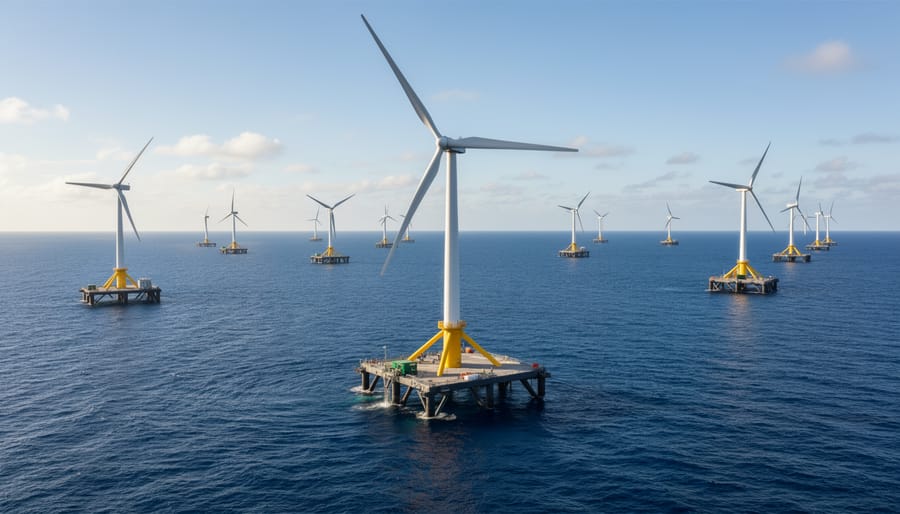
Traditional wind turbines require shallow waters with stable seabeds, limiting where they can be installed. Floating wind farms solve this challenge by mounting turbines on buoyant platforms anchored to the ocean floor with cables, similar to offshore oil rigs. This breakthrough technology enables wind energy capture in waters exceeding 60 meters deep, where some of the strongest and most consistent winds blow.
For Ontario, floating turbines could unlock significant potential across the Great Lakes. Lake Ontario’s deeper sections and Lake Superior’s vast expanses have remained largely untapped for wind energy due to depth constraints with fixed-bottom turbines. Floating platforms would allow developers to position turbines where wind resources are optimal while minimizing visual impact from shorelines and reducing conflicts with shipping lanes and recreational areas.
Several designs are currently being tested worldwide, including spar-buoy, semi-submersible, and tension-leg platforms. Each offers different advantages for stability, installation costs, and maintenance requirements. While commercial floating wind farms already operate in Europe and Asia, the technology is still emerging in North America.
The key advantage for Ontario lies in accessing previously unusable locations without compromising the province’s freshwater ecosystems. As manufacturing costs decrease and installation techniques improve, floating wind farms could become a practical addition to Ontario’s renewable energy portfolio within the next decade.
Smart Wind: AI and Digital Innovation
Predictive Maintenance That Saves Millions
Wind turbines are becoming smarter thanks to artificial intelligence that can predict mechanical problems before they lead to expensive breakdowns. Advanced sensors continuously monitor vibrations, temperature fluctuations, and performance patterns across turbine components, feeding data to AI systems that identify subtle warning signs invisible to human operators.
These predictive maintenance systems are transforming wind farm economics. Traditional maintenance schedules often mean shutting down turbines too early or too late—either wasting operational time or risking catastrophic failures that can cost millions in repairs and lost electricity generation. AI-driven monitoring pinpoints exactly when components need attention, reducing unplanned downtime by up to 30 percent according to industry studies.
For Ontario’s wind energy sector, this technology means turbines can operate reliably through harsh winter conditions when energy demand peaks. Early detection prevents small issues from escalating during difficult weather when repairs become more dangerous and time-consuming. Some Ontario wind farms are already implementing these systems, extending turbine lifespan while maximizing clean energy production. The result benefits everyone—lower operational costs make wind energy more competitive, while improved reliability strengthens Ontario’s renewable energy grid and supports local jobs in the growing clean technology sector.

Grid Integration Made Seamless
One of wind energy’s historical challenges—its intermittent nature—is rapidly becoming manageable through sophisticated grid integration technologies. Advanced weather forecasting systems now predict wind patterns with remarkable accuracy up to 72 hours in advance, allowing grid operators to plan energy distribution more effectively. These artificial intelligence-powered forecasts analyze atmospheric data, historical wind patterns, and real-time conditions to predict power output within a margin of just five percent.
Smart grid technology plays an equally crucial role by automatically balancing electricity supply and demand across the network. When wind generation exceeds immediate needs, smart grids can redirect excess power to energy storage systems or other regions. Ontario’s Independent Electricity System Operator has been implementing these intelligent systems across the province, enabling seamless integration of wind power alongside traditional sources.
Battery storage systems are the final piece of this integration puzzle. Large-scale lithium-ion and emerging flow battery installations store surplus wind energy during peak production periods and release it when winds calm. Several Ontario communities are already piloting these storage solutions, demonstrating how wind power can provide reliable, round-the-clock electricity. Together, these technologies transform wind from an unpredictable resource into a dependable cornerstone of our clean energy future.
Materials Revolution: Lighter, Stronger, Greener
The wind industry faces a growing challenge: what happens to turbine blades when they reach the end of their 20-25 year lifespan? Currently, most blades end up in landfills because the fiberglass and epoxy resin materials are difficult to recycle. This disposal problem threatens to undermine wind energy’s green credentials, but a materials revolution is already underway to solve it.
Researchers and manufacturers are developing recyclable blade materials that maintain the strength of traditional composites while allowing for easier disassembly and reuse. Companies like Siemens Gamesa have introduced blades made with new resin types that can be broken down chemically at end-of-life, separating the components for remanufacturing. These recyclable blades perform identically to conventional ones but eliminate the landfill burden.
Bio-based composites represent another breakthrough, replacing petroleum-based materials with plant fibers and natural resins. These alternatives reduce the carbon footprint of blade production by up to 40 percent while offering comparable strength and durability. Some manufacturers are experimenting with flax fiber and hemp-based materials that grow abundantly in agricultural regions like Ontario, creating potential local supply chains.
Carbon fiber alternatives are making turbines lighter without sacrificing structural integrity. Lighter blades mean less stress on towers and foundations, reducing material requirements across the entire turbine. This weight reduction also simplifies transportation and installation, particularly important for Ontario’s remote northern communities where logistics pose significant challenges.
Several Ontario-based research institutions are partnering with manufacturers to test these new materials in regional climate conditions. These collaborations ensure that innovations work effectively through harsh Canadian winters and variable wind patterns, while positioning Ontario companies as leaders in sustainable turbine manufacturing. The materials revolution transforms wind energy’s sustainability story from cradle to grave.
Ontario’s Wind Energy Future: Local Opportunities
Community-Powered Wind Projects
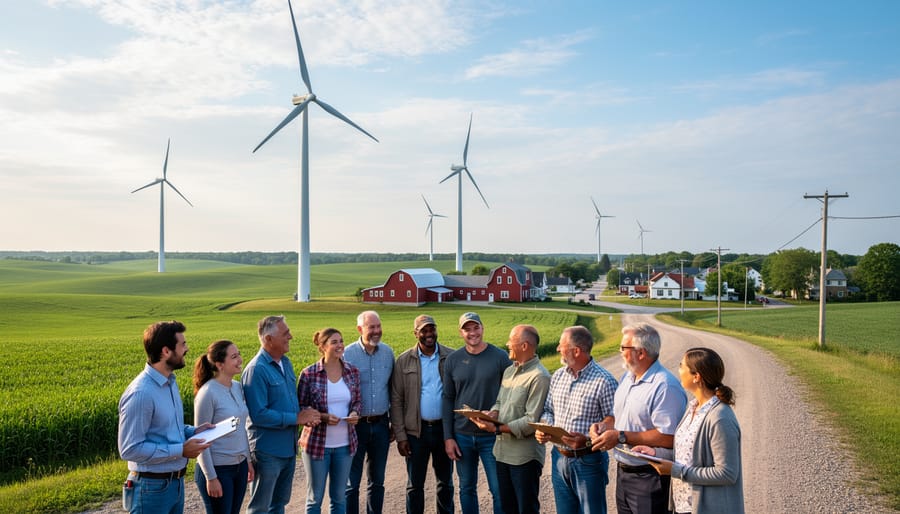
A promising shift is underway in how wind projects are developed and owned across Ontario. Community-powered wind initiatives place decision-making and financial benefits directly in the hands of local residents, moving beyond traditional corporate ownership models.
These projects allow municipalities, cooperatives, and Indigenous communities to become stakeholders in renewable energy infrastructure. Rather than simply hosting turbines on their land, communities can invest in projects, share in revenue, and guide development to align with local priorities. This approach strengthens public support by ensuring wind energy directly benefits those living nearest to the installations.
Ontario has seen successful examples emerge in recent years. Community groups have partnered with developers to establish shared ownership structures, where local investors receive dividends from electricity sales. Some municipalities have incorporated wind revenues into funding for recreation facilities, road improvements, and other public services.
Indigenous-led wind projects represent another significant development, combining clean energy generation with economic reconciliation. These initiatives provide sustainable revenue streams while respecting traditional land relationships and creating local employment opportunities.
The community ownership model addresses a common challenge: ensuring rural areas hosting wind infrastructure receive tangible benefits beyond lease payments. As technology advances and installation costs decrease, these locally-driven projects are becoming increasingly viable, potentially reshaping Ontario’s wind energy landscape to be more inclusive and economically distributed.
Untapped Potential in Northern Communities
For dozens of remote communities across northern Ontario, diesel generators remain the primary power source—an expensive, polluting reality that future wind technologies could transform. These fly-in communities, including many First Nations, currently pay up to ten times more for electricity than southern residents while enduring the noise, air pollution, and climate impacts of fossil fuel dependence.
Emerging wind innovations offer a pathway to energy independence. Next-generation small-scale turbines designed for harsh northern climates can operate efficiently in extreme cold and withstand ice buildup—challenges that have historically limited wind deployment in these regions. These systems, combined with advanced battery storage, could provide reliable 24/7 power without diesel backup.
Several northern Ontario communities are already exploring this potential. Fort Severn First Nation and other remote settlements have expressed interest in hybrid renewable systems that integrate wind with solar and storage technologies. The provincial government’s Indigenous Community Energy Plans program supports these initiatives, recognizing that energy sovereignty strengthens community resilience.
The economic case is compelling. While upfront costs remain significant, diesel fuel transportation to remote locations is extraordinarily expensive. Wind systems could pay for themselves within years while creating local jobs in installation and maintenance. For northern communities, future wind technology represents more than clean energy—it’s about self-determination, cost savings, and building sustainable futures on their own terms.
Breaking Down the Barriers
While wind energy holds tremendous promise, several obstacles still stand between today’s deployment and the widespread adoption needed for a clean energy future. Understanding these challenges—and the innovative solutions emerging to address them—is essential for Ontario’s transition to renewable power.
Regulatory complexities remain one of the most significant hurdles. Wind projects often navigate multiple layers of approval from municipal, provincial, and federal authorities, creating timelines that can stretch for years. However, Ontario is streamlining these processes through integrated permitting systems that coordinate requirements across different agencies. Recent provincial initiatives aim to reduce approval times by up to 40 percent for projects meeting specific criteria, making wind development more economically viable.
Public acceptance presents another challenge, particularly regarding visual impacts and noise concerns. Communities sometimes resist nearby wind installations, fearing property value declines or quality of life changes. Progressive developers are now addressing these concerns through enhanced community engagement, offering local ownership opportunities and revenue-sharing models. In Wellington County, for example, participatory planning sessions have transformed skeptical residents into project champions, demonstrating how transparency builds trust.
Wildlife protection, especially for birds and bats, requires careful consideration. Modern radar systems and artificial intelligence now detect approaching flocks, temporarily stopping turbines during migration periods. These technologies reduce avian collisions by up to 70 percent while maintaining energy production efficiency.
Storage limitations pose perhaps the greatest technical challenge, as wind’s intermittency requires backup power or storage solutions. Battery technology improvements and hybrid systems combining wind with solar and storage are making 24/7 renewable power increasingly feasible. Ontario’s growing investment in grid-scale batteries is already smoothing out wind’s variability, proving that technical innovation can overcome nature’s inconsistency.
The future of wind energy in Ontario holds remarkable promise, with innovations like floating offshore turbines, advanced blade designs, and AI-powered systems poised to dramatically increase efficiency and accessibility. While some technologies are already being piloted, widespread implementation will unfold gradually over the next decade, requiring coordinated efforts among researchers, policymakers, and communities. Ontario’s strong foundation in clean energy positions it well to adopt these advancements, potentially generating thousands of jobs while significantly reducing carbon emissions. As these technologies mature, they’ll complement existing renewable infrastructure, bringing us closer to a truly sustainable energy grid. The path forward demands patience and investment, but the trajectory is clear: wind energy will play an increasingly vital role in powering Ontario’s homes, businesses, and communities while protecting the environment for future generations.